
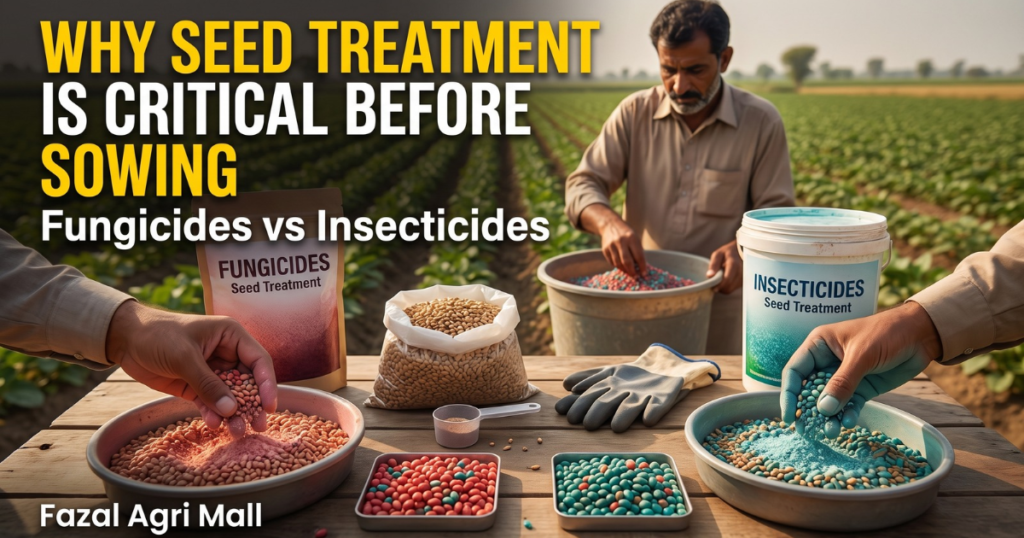
Why Seed Treatment Is Critical Before Sowing: Fungicides vs Insecticides
Table of Contents
Healthy crops begin with healthy seeds. Before sowing, farmers need to protect seeds from soil-borne diseases, harmful insects and early-season threats that can reduce germination and weaken young plants. Seed treatment before sowing is an important crop protection practice that helps establish a strong, uniform crop when the right product is selected for the specific risk.
For farmers in Pakistan, understanding the difference between fungicides and insecticides is essential for making better decisions about crop protection, seedling health and farm productivity. In this guide, fazalagrimall explains how seed treatment works, when fungicides or insecticides may be needed and how to choose a suitable treatment for your crop.
What Is Seed Treatment Before Sowing?
Seed treatment is the process of applying a suitable protective product to seeds before planting. Depending on the product and crop, treatment may help protect seeds and emerging seedlings from fungal diseases or insect pests during the early stages of growth.
Farmers may use seed treatments for crops such as wheat, maize, rice, cotton, pulses and vegetables. The correct treatment depends on the crop variety, local pest pressure, soil conditions and the diseases or insects that commonly affect the field.
The main objectives of seed treatment include:
- Supporting healthy seed germination and seedling establishment.
- Reducing the risk of certain seed-borne and soil-borne diseases.
- Protecting seeds and young seedlings against specified insect pests.
- Helping farmers establish a more uniform crop stand.
- Reducing avoidable early-season crop losses when a relevant threat is present.
Important: Seed treatment does not guarantee higher yields. Its effectiveness depends on the product, correct application, seed quality and the actual pest or disease risk.
Why Is Seed Treatment Critical Before Sowing?
Seedlings are particularly vulnerable during germination and the first stages of growth. Damage during this period can leave gaps in the field, reduce plant populations and increase the need for re-sowing.
Here are the main reasons farmers should consider seed protection before planting.
Protects Seeds Against Fungal Diseases
Fungi and fungus-like pathogens can cause seed rot, seedling blight and damping-off under favorable conditions. Infected seeds or contaminated soil may prevent healthy emergence and damage young plants.
An appropriate seed-treatment fungicide can help manage specific fungal pathogens when used according to its approved label. However, not every fungicide controls every disease, so identifying the likely problem is important.
Helps Manage Early-Season Insect Pests
Some insects attack seeds, roots or young shoots, reducing seedling survival and crop establishment. Depending on the crop and local conditions, pests may include certain soil-dwelling insects and other early-season crop pests.
Where a relevant pest is present, an approved insecticidal seed treatment may provide protection during a specified period. It will not necessarily control insects that attack the crop later in the season.
Supports Uniform Crop Establishment
When seeds germinate and seedlings emerge more evenly, farmers can achieve a more consistent crop stand. Disease or insect damage can create empty spaces and uneven growth.
Seed treatment can contribute to better establishment when the targeted threat is present, but seed quality, sowing depth, soil moisture and planting conditions remain equally important.
Can Reduce the Need for Emergency Re-Sowing
Poor emergence may force farmers to spend additional money on seeds, labor, fuel and field preparation. Preventing a known seed-borne disease or early insect problem can help reduce this risk.
The best approach is to assess field history and crop-specific threats before sowing rather than applying chemicals without a clear reason.
Improves Early Crop Protection Planning
Treating seeds before sowing allows farmers to plan crop protection from the beginning. It also makes it easier to choose a product for a known problem rather than reacting after significant damage appears.
A good crop protection plan combines quality seeds, suitable seed treatment, proper sowing practices, field monitoring and responsible pesticide use.
Fungicides vs Insecticides for Seed Treatment
Fungicides and insecticides serve different purposes. Choosing between them depends on whether the main threat is a disease-causing pathogen or a damaging insect.
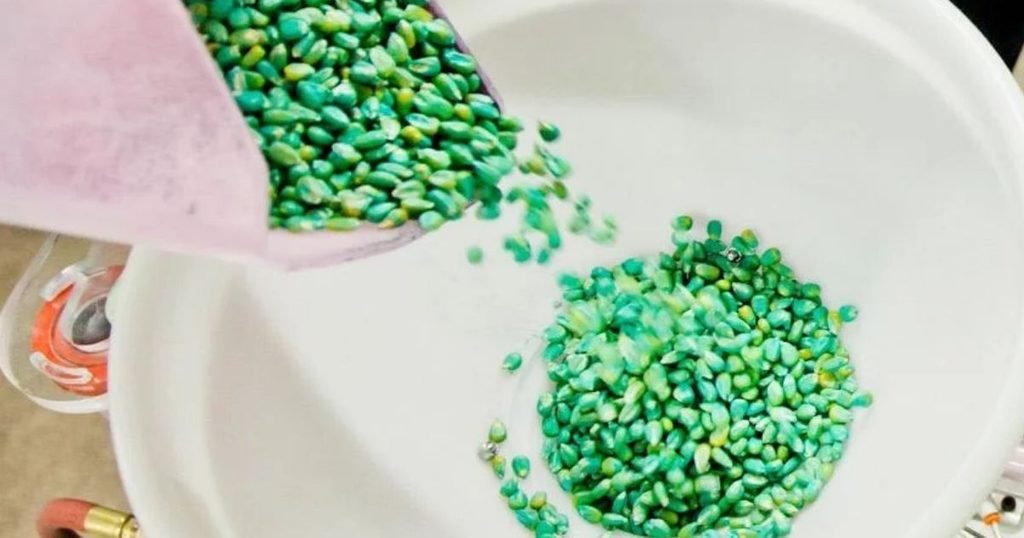
Fungicide seed treatment
Fungicides are used to manage susceptible fungal pathogens associated with seeds or soil. Depending on the product, they may help protect against seed rot, certain seedling blights, damping-off and some seed-borne diseases.
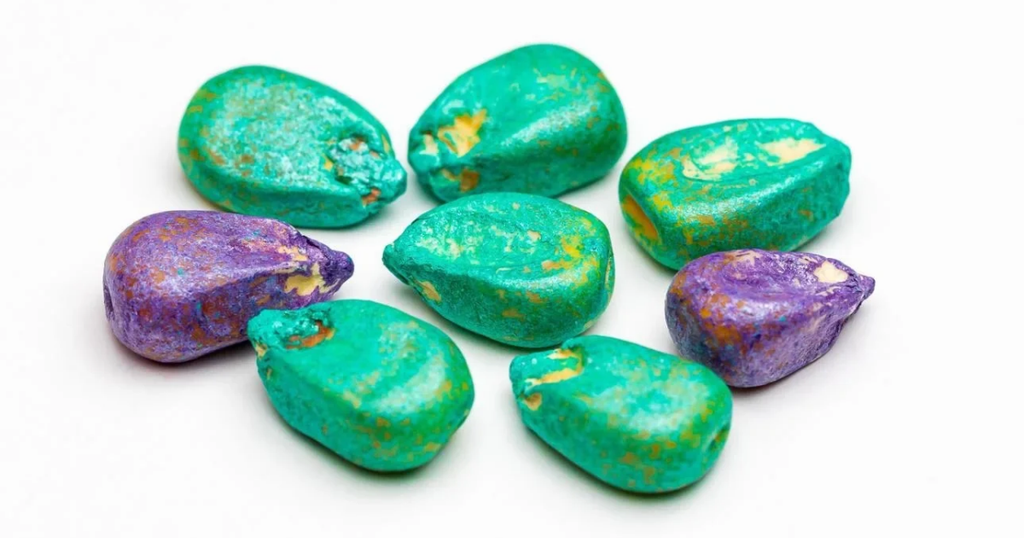
Insecticide seed treatment
Insecticides are used to control specified insect pests that attack seeds or emerging seedlings. Depending on the active ingredient and crop, they may protect against certain soil insects or early-season sucking pests.
- Main purpose: Insect pest control.
- Useful when: A relevant insect pest is expected or has a documented field history.
- Potential benefit: Reduced damage from targeted insects during early crop development.
Agricultural seed-treatment guidance distinguishes these treatments according to their intended targets and recommends selecting products based on the crop and pest or disease involved.
Key Differences Between Fungicides and Insecticides
| Feature | Fungicide | Insecticide |
| Target | Susceptible fungal pathogens | Target insect pests |
| Main role | Manage fungal seed and seedling diseases | Manage seedling-damaging insects |
| Examples of problems | Seed rot, certain seedling blights | Termites or other specified crop pests |
| Selection basis | Disease identification and product label | Pest identification and product label |
| Main limitation | Does not control insect pests | Does not control fungal diseases |
Which one is better? Neither is universally better. A fungicide is appropriate when the primary threat is a susceptible fungal pathogen, while an insecticide is appropriate when the threat is a targeted insect pest. Some approved products combine both types of protection, but a combination should only be used when justified for the crop and permitted by the product label.
Can Farmers Use Fungicides and Insecticides Together?
Yes, some registered seed-treatment products combine fungicidal and insecticidal active ingredients. These formulations can be useful when both disease and insect risks are present.
However, farmers should not mix separate products without confirming compatibility and label approval. An unsuitable mixture or incorrect dose may damage seeds, reduce germination, create unnecessary costs or increase risks to people and the environment.
Before using a combined seed treatment:
- Identify the crop and the likely disease or insect threat.
- Check whether the product is registered and approved for that crop and use in Pakistan.
- Follow the exact label rate and application method.
- Check compatibility before combining products.
- Wear the recommended protective equipment and keep treated seeds away from food, animal feed, children and livestock.
For additional guidance, consult an agricultural extension officer or qualified crop-protection professional. Product recommendations vary by crop, pest, formulation and local regulations.
How to Choose the Right Seed Treatment for Crops in Pakistan
Pakistan’s farmers grow a wide range of crops under different soil and weather conditions. The best seed treatment depends on the crop’s specific risks rather than a single product being suitable for every field.
Wheat Seed Treatment
Wheat farmers may need to consider seed-borne diseases, including loose smut and certain fungal seedling diseases. Field history, seed quality and disease identification help determine whether a fungicidal treatment is appropriate.
Research conducted in Punjab has evaluated seed-dressing treatments for managing wheat seed- and soil-borne diseases, highlighting the importance of choosing treatments for the actual disease problem.
Maize Seed Treatment
Maize seeds and seedlings can be vulnerable to certain soil-borne diseases and early insect pests. Farmers should check whether their seed is already treated and select additional protection only when necessary and label-approved.
Cotton Seed Treatment
Cotton seedlings may face early-season sucking pests, including aphids, jassids and whiteflies, depending on local conditions. An insecticidal seed treatment may be appropriate for certain registered uses, but it does not eliminate the need to monitor fields after emergence.
Vegetable Seed Treatment
Vegetable crops such as tomatoes, chillies and other garden vegetables may be affected by damping-off and other seedling diseases. Use only treatments approved for the specific crop, since some products are not suitable for every vegetable or planting system.
Rice Seed Treatment
Rice treatment requirements vary with the production system, seed health and local disease or pest pressure. Farmers should use crop-specific advice rather than transferring recommendations from wheat, cotton or vegetables.
7 Best Practices for Effective Seed Treatment Before Sowing
Using a suitable product correctly is just as important as selecting it.
- Start with quality seed: Use certified or reliable seed with good germination and suitable varietal characteristics.
- Identify the problem: Determine whether the main risk is fungal disease, insect damage or another cause.
- Check for pre-treated seeds: Avoid unnecessary duplicate applications that could damage seeds.
- Use the correct product: Verify that the product is registered for the crop and intended seed-treatment use.
- Follow the label rate: Never guess the dose or assume that the same rate works for every seed type.
- Ensure even coverage: Apply the product using the recommended method and equipment.
- Handle treated seeds safely: Wear suitable protective equipment, avoid dust exposure and prevent treated seeds from entering food or feed supplies.
Also, do not assume that treated seed can be stored indefinitely. Follow the seed supplier’s storage instructions and any product-specific restrictions.
Frequently Asked Questions (FAQs)
1. Why is seed treatment important before sowing?
Seed treatment can help protect seeds and emerging seedlings from specific fungal diseases or insect pests. It may improve crop establishment when the treatment targets a real field risk.
2. What is the difference between fungicide and insecticide seed treatment?
Fungicides target susceptible fungal pathogens that cause diseases, while insecticides target specified insect pests that damage seeds or young plants. The correct choice depends on the problem being managed.
3. Can I use fungicides and insecticides on the same seeds?
Some registered products combine both types of protection. Separate products should only be combined when their labels and compatibility guidance permit it.
4. Is seed treatment necessary for every crop?
No. The need depends on seed health, crop type, field history, local pest pressure and growing conditions. Healthy seeds and good farming practices remain essential.
5. Does seed treatment increase crop yield?
Seed treatment may help protect yield potential by reducing losses caused by targeted diseases or insects. However, it does not guarantee higher yields, which also depend on irrigation, nutrition, weather and crop management.
6. Which seed treatment is best for wheat in Pakistan?
The best option depends on whether wheat is at risk from seed-borne diseases, soil-borne pathogens or particular insect pests. Choose a registered product based on the identified threat and current local agricultural recommendations.
Final Thought
Successful farming begins before the seed enters the soil. Understanding why seed treatment is critical before sowing helps farmers make informed decisions about fungicides, insecticides and early crop protection.
The key is to identify the actual risk, select a suitable registered treatment, follow the product label and combine seed protection with proper sowing practices. Applying chemicals without a clear need is not always beneficial; informed decisions are more effective and responsible.
At fazalagrimall, our goal is to help Pakistani farmers make better-informed decisions about seeds, fertilizers and crop protection. Explore suitable agricultural products and seek crop-specific advice to give your crops a healthier start and support better farming outcomes.
Need help choosing the right fungicide for your potato or tomato crop? Contact Fazal Agri Mall today for reliable agricultural products and expert guidance to protect your crops and achieve healthier harvests.

No Comments