
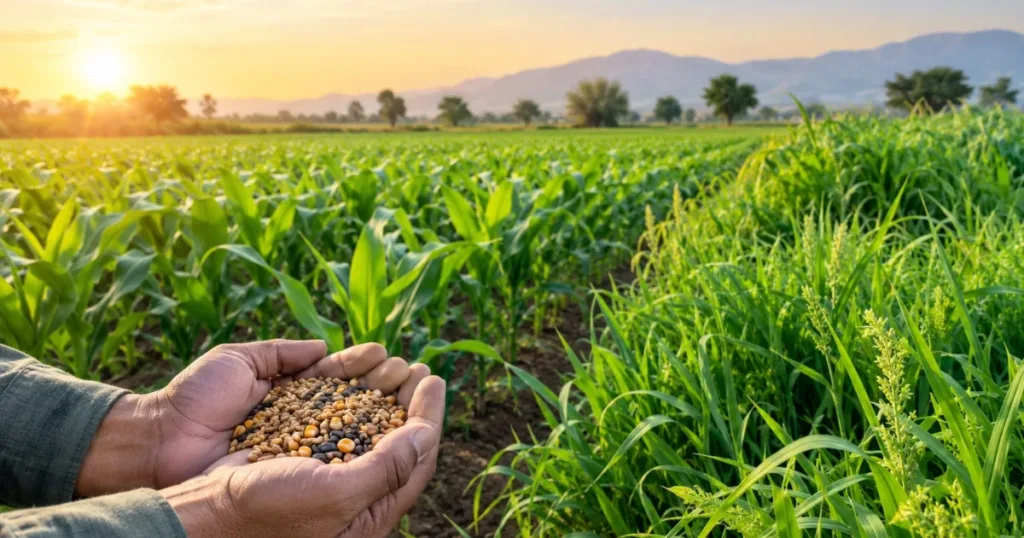
Maximize Yields with High-Quality Crop Seeds & Forage Seeds
Table of Contents
Every successful harvest begins with one important decision: choosing the right seeds. Whether you are growing wheat, maize, rice, vegetables or producing nutritious feed for livestock, the quality of your seed can influence crop establishment, plant growth and overall farm productivity.
Farmers today are looking for reliable crop seeds and forage seeds that match their soil, climate, growing season and production goals. At fazalagrimall, we understand that farmers need dependable agricultural solutions that help them make smarter planting decisions.
Using high quality crop seeds is not simply about planting more-it is about giving every acre a stronger opportunity to produce a healthy and productive crop.
Why High-Quality Crop Seeds Matter
The foundation of a productive farm starts with healthy planting material. High-quality crop seeds are selected for desirable characteristics such as germination, genetic purity, adaptability and crop performance.
Poor-quality or unsuitable seed can result in uneven germination, weak crop establishment, unwanted plants and inconsistent growth. Research and agricultural programs in Punjab have also highlighted the importance of improved and quality seed for increasing agricultural productivity.
When farmers select the right seed variety and combine it with suitable soil preparation, irrigation, nutrition and crop management, they can create better conditions for a successful harvest.
Key Benefits of High-Quality Crop Seeds
- Better and more uniform crop establishment
- Stronger early plant growth
- Improved use of land and available resources
- Greater consistency across the field
- Better suitability for specific growing conditions
- Potential for improved crop productivity
- Access to improved or specialized varieties
Choose the Right Seeds for Your Farming Goals
Not every seed variety is suitable for every farm. Before purchasing agricultural seeds, farmers should consider the crop type, soil conditions, water availability, sowing season, local climate, disease pressure and intended market.
For example, a farmer growing maize for grain may require a different variety from someone growing maize primarily for silage or livestock feed. Similarly, forage crops such as alfalfa, berseem, sorghum and oats have different growing requirements.
The Punjab Agriculture Department’s Fodder Research Institute lists numerous forage varieties, including oats, berseem, alfalfa, sorghum, pearl millet, maize and cowpea, demonstrating the range of options available for different production objectives.
High-Quality Crop Seeds for Better Farm Productivity
Farmers searching for high-yield crop seeds should look beyond the phrase “high yield.” A suitable variety needs to perform well under the conditions where it will actually be grown.
Important factors include:
Germination Quality
Good germination helps establish an even crop stand. Always check the seed label, recommended sowing rate and quality information before planting.
Variety Selection
Choose varieties according to the crop, season, soil type and farming objective. Improved varieties can offer useful characteristics such as disease tolerance, adaptability, maturity duration or improved productivity.
Climate Adaptability
A variety that performs well in one region may not necessarily perform the same way somewhere else. Local growing conditions should always be considered.
Disease and Pest Considerations
Selecting varieties with appropriate resistance or tolerance traits can support better crop management, although no seed variety eliminates the need for proper monitoring and crop protection.
Why Forage Seeds Are Important for Livestock Farmers
For livestock and dairy farmers, high-quality crop seeds and forage seeds play an important role in maintaining productive farming operations. Nutritious forage grown from quality seeds can provide an essential part of a balanced livestock feeding program, supporting healthy animal growth and consistent feed availability. Choosing reliable high-quality crop seeds and suitable forage varieties helps farmers build a stronger foundation for both crop production and livestock management.
Common forage options include:
- Alfalfa seeds
- Berseem seeds
- Oat seeds
- Sorghum seeds
- Rhodes grass seeds
- Pearl millet seeds
- Fodder maize
- Ryegrass seeds
Different forage crops provide different growth characteristics and nutritional profiles. For instance, alfalfa is widely valued as a high-protein forage, while crops such as sorghum and maize can be used for green fodder or silage.
Research on berseem in Punjab has demonstrated that variety and harvesting management can significantly affect forage yield and quality.
High-Quality Forage Seeds for Better Livestock Feed
Choosing high-quality forage seeds can help farmers establish a productive fodder crop and maintain a more consistent supply of green feed.
Forage selection should take into account:
- Livestock requirements
- Available land
- Irrigation facilities
- Soil type
- Local climate
- Sowing season
- Number of expected cuts
- Intended use such as green fodder, hay or silage
For example, alfalfa is commonly grown for green forage and hay, while Rhodes grass and sorghum-Sudan grass can provide productive forage options under suitable conditions.
Crop Seeds vs. Forage Seeds: What Is the Difference?
Although both are agricultural seeds, their purposes can be different.
Crop seeds are generally planted to produce crops such as wheat, rice, maize, cotton, pulses, oilseeds and vegetables. The final objective may be grain, fiber, oil, vegetables or another agricultural product.
Forage seeds, on the other hand, are primarily planted to produce feed for livestock. The farmer may focus on green biomass, nutritional value, repeated cutting, hay production or silage.
Choosing between them depends entirely on the purpose of the farm. A dairy farmer may prioritize reliable forage production, while a grain farmer may focus on varieties selected for grain productivity and market demand.
How to Maximize Yields After Selecting Quality Seeds
Buying quality seed is only the first step. Good crop management is essential for converting seed potential into a productive harvest.
Prepare the Soil Properly
Healthy soil supports healthy plant development. Before sowing, evaluate soil conditions and prepare the field according to the crop’s requirements.
Follow the Recommended Sowing Time
Planting too early or too late can affect crop establishment and development. Always follow locally appropriate sowing recommendations for your selected variety.
Use the Correct Seed Rate
Overseeding can increase competition between plants, while insufficient seed can create gaps in the field. Follow the recommended seed rate for the specific crop and variety.
Manage Irrigation Carefully
Water requirements differ between crops and growth stages. Proper irrigation can support crop development while avoiding unnecessary water stress or waterlogging.
Monitor Weeds, Pests and Diseases
Regular field monitoring helps farmers identify problems early. Integrated crop management practices can reduce unnecessary losses and support healthier crops.
Harvest at the Appropriate Stage
Harvest timing can influence both quantity and quality. This is particularly important for forage crops, where cutting management can affect subsequent growth and forage quality.
Why Choose fazalagrimall for Agricultural Seeds?
At fazalagrimall, our goal is to make quality agricultural products easier for farmers to find. From crop seeds to forage seeds, selecting the right product can help farmers plan their cultivation around their specific production needs.
Whether you are looking for seeds for field crops, vegetables, livestock forage or seasonal planting, choosing a suitable variety from a reliable source is an important part of responsible farm planning.
A productive farm starts with a thoughtful seed selection—and every successful harvest starts in the field.
Frequently Asked Questions
1. What are high-quality crop seeds?
High-quality crop seeds are seeds that meet appropriate quality standards for characteristics such as germination, purity, genetic identity and suitability for their intended growing conditions.
2. What are forage seeds used for?
Forage seeds are planted to produce crops used primarily as livestock feed. Common examples include alfalfa, berseem, oats, sorghum, Rhodes grass and fodder maize.
3. How do I choose the best crop seeds?
Consider your crop objective, soil type, climate, sowing season, water availability, disease considerations and the recommended characteristics of the available varieties.
4. Can quality seeds increase crop yield?
Quality seed can contribute to better crop establishment and more uniform plant growth. However, final yield also depends on soil fertility, weather, irrigation, pest management, sowing practices and other factors.
5. Which forage seeds are suitable for livestock?
Common options include alfalfa, berseem, oats, sorghum, Rhodes grass, pearl millet and fodder maize. The appropriate choice depends on livestock needs, climate, soil, season and intended use.
6. Where can I find quality agricultural seeds?
Farmers should purchase seeds from reliable agricultural suppliers and check the variety, quality information, recommended sowing conditions and packaging details before purchasing. fazalagrimall provides agricultural seed solutions for farmers looking for suitable crop and forage seed options.
Final Thought
Maximize Yields with High-Quality Crop Seeds & Forage Seeds by starting with the right foundation: suitable, quality seed. The right variety, combined with proper soil preparation, timely sowing, irrigation, nutrition and crop management, can create better opportunities for productive farming.
Whether your goal is grain production, vegetable cultivation or nutritious livestock forage, make seed selection an important part of your farming plan.
Choose wisely, plant confidently and grow with fazalagrimall.
Ready to grow with quality seeds? Contact fazalagrimall today for premium crop and vegetable seeds tailored to your farming needs.


No Comments