
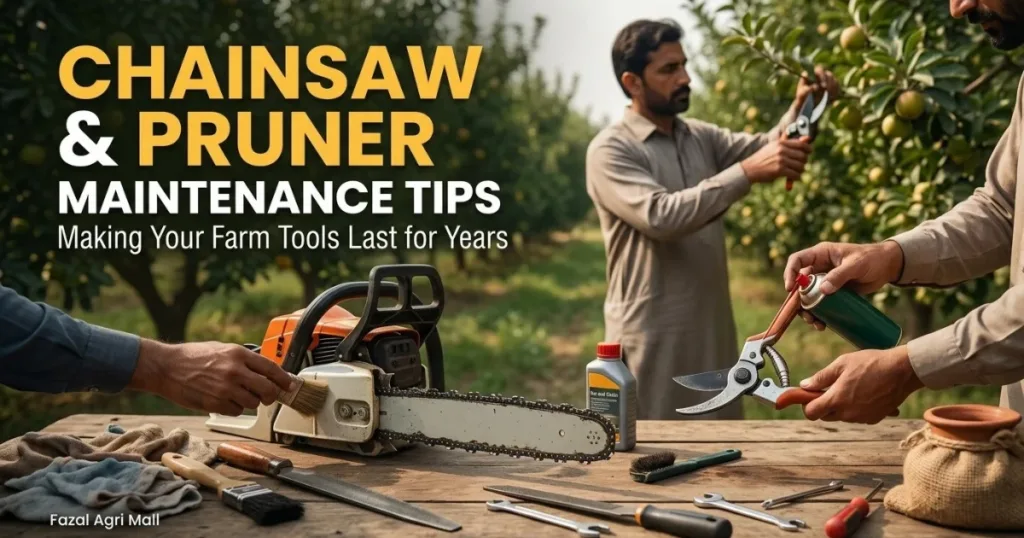
Chainsaw & Pruner Maintenance Tips: Making Your Farm Tools Last for Years
Table of Contents
Farm tools are essential for maintaining healthy crops, trimming trees and managing everyday agricultural tasks. Whether you are a smallholder farmer orchard owner or gardening enthusiast, chainsaws and pruning shears help you complete your work efficiently. However, without proper care, even high-quality tools can become dull, rusty or damaged over time.
The good news is that regular maintenance can extend the lifespan of your equipment, improve cutting performance and reduce unnecessary repair costs. By following these practical Chainsaw & Pruner Maintenance Tips, you can keep your farm tools in excellent condition for years.
In this guide, we will explain how to clean, sharpen, lubricate, inspect and store chainsaws and pruning tools properly.
Why Is Chainsaw and Pruner Maintenance Important?
Maintaining your farm tools is about more than keeping them clean. Proper care helps protect your investment and makes everyday agricultural work easier.
Here are some important benefits of regular tool maintenance:
- Longer tool lifespan: Prevents premature wear, rust and corrosion.
- Better cutting performance: Sharp blades and properly maintained chains cut more efficiently.
- Reduced repair costs: Early detection of damaged parts helps prevent expensive repairs.
- Improved safety: Well-maintained tools are less likely to malfunction.
- Greater productivity: Efficient tools help farmers save time and effort.
For farmers in Pakistan, where agricultural equipment is often used throughout demanding farming seasons, regular maintenance is a practical way to protect valuable tools.
Clean Your Chainsaw After Every Use
Cleaning is one of the most important chainsaw maintenance practices. Sawdust, dirt, oil residue and tree sap can accumulate around the chain, guide bar and air intake, affecting performance over time.
Follow these simple steps to clean your chainsaw:
- Switch off the chainsaw and allow it to cool completely.
- Disconnect the spark plug wire on petrol models or remove the battery from cordless models before maintenance.
- Wear appropriate protective gloves when handling the chain.
- Remove sawdust and debris using a suitable brush.
- Clean the guide bar groove and oil outlet according to the manufacturer’s instructions.
- Inspect the chain and guide bar for visible damage.
- Wipe the equipment dry before storage.
Never clean, adjust or service a running chainsaw. Always follow the manufacturer’s safety instructions.
Keep Chainsaw Blades Sharp
A dull chainsaw chain can make cutting slower, increase physical effort and contribute to unsafe operating conditions. Regular sharpening helps maintain efficient cutting performance.
Watch for these signs that your chainsaw chain needs sharpening:
- The saw produces fine sawdust instead of larger wood chips.
- Cutting requires excessive pressure.
- The saw cuts unevenly or pulls to one side.
- Cutting performance noticeably decreases.
Use the correct file size and sharpening angle recommended for your chain. Check the depth gauges with the appropriate tool and replace chains that are excessively worn, damaged or difficult to sharpen correctly.
Always switch off the chainsaw and disconnect its power source before sharpening. If you are unfamiliar with chain sharpening, seek assistance from a qualified technician.
Keeping your chainsaw sharp is one of the simplest ways to improve cutting efficiency and protect your equipment.
Lubricate the Chainsaw Chain and Guide Bar
Proper lubrication reduces friction between the chain and guide bar. Without sufficient lubrication, these components can overheat and wear prematurely.
Follow these chainsaw lubrication tips:
- Use the recommended bar-and-chain oil.
- Check the oil reservoir before every use.
- Keep the oil outlet and guide bar groove clean.
- Check that the automatic lubrication system works correctly.
- Never operate a chainsaw with inadequate chain lubrication.
Avoid using unsuitable oils unless the manufacturer specifically approves them.
Regular lubrication helps protect essential components and supports the long-term performance of your agricultural equipment.
Clean and Maintain Your Pruning Shears
Pruning shears are useful for trimming fruit trees, removing dead branches, shaping plants and maintaining healthy orchards. However, plant sap, dirt and moisture can accumulate on the blades and moving parts.
To keep your pruning tools in excellent condition:
- Clean the blades after each pruning session.
- Remove sticky sap with a suitable blade cleaner.
- Dry the blades thoroughly to prevent rust.
- Check the pivot bolt, spring, handles and locking mechanism.
- Apply an appropriate lubricant to the pivot and other approved moving parts.
- Sharpen the cutting blade according to the manufacturer’s instructions.
When pruning diseased plants, clean and disinfect the blades using a suitable product according to its label instructions. This helps reduce the risk of spreading plant diseases between trees.
Sharpen Pruner Blades for Clean Cuts
Sharp pruning blades produce cleaner cuts and make trimming easier. Blunt blades may crush stems, damage branches and require more effort during pruning.
Follow these steps to maintain your pruning blades:
- Clean the blade thoroughly before sharpening.
- Check the recommended sharpening angle.
- Use an appropriate sharpening stone or file on the cutting bevel.
- Avoid removing excessive metal.
- Check that the blades open and close smoothly.
- Replace blades that are cracked, badly chipped or excessively worn.
Bypass pruners are generally suitable for clean cuts on living stems, while anvil pruners are often useful for dead or dry material, depending on the design.
For farmers and orchard owners, sharp pruning shears make routine tree care more efficient and consistent.
Inspect Screws, Springs and Moving Parts
Even durable farm tools can loosen or wear out after repeated use. Regular inspections help identify problems before they become serious.
For chainsaws, inspect the fasteners, chain tensioning components, guide bar, chain catcher and safety features. For pruning shears, check the pivot bolt, spring, blade alignment, handles and locking mechanism.
Keep these maintenance rules in mind:
- Tighten loose fasteners according to the manufacturer’s instructions.
- Replace worn springs and damaged components with compatible parts.
- Avoid using tools with cracked handles or loose blades.
- Stop using a chainsaw if its chain brake or another essential safety feature is faulty.
- Consult a qualified technician for complex repairs.
Regular inspections help reduce equipment downtime and protect your investment in agricultural tools.
Maintain Petrol and Battery-Powered Chainsaws Correctly
Different chainsaw models require different maintenance routines. Understanding your equipment helps prevent avoidable problems.
Petrol Chainsaws
Petrol chainsaws require regular checks of their air filters, spark plugs, fuel lines, cooling areas and fuel requirements.
Use the recommended fuel and oil, clean or replace filters as instructed and address leaks or starting problems before continuing to operate the saw.
Battery-Powered Chainsaws
For cordless chainsaws, remove the battery before cleaning or servicing. Keep battery contacts clean and dry, inspect the battery for damage and follow the manufacturer’s charging and storage recommendations.
Electric Chainsaws
Inspect the power cord, plug, switches and housing for visible damage. Disconnect the saw from the electrical supply before performing maintenance and never operate equipment with damaged electrical components.
Always follow your owner’s manual for model-specific maintenance schedules and servicing requirements.
Store Chainsaws and Pruners in a Dry Place
Incorrect storage can damage tools even when they are cleaned and maintained regularly. Moisture, dust, extreme temperatures and accidental impacts can shorten the lifespan of agricultural equipment.
Follow these tool storage tips:
- Clean and dry tools before storage.
- Fit the guide bar cover on your chainsaw.
- Close and lock pruning shears or use a protective blade cover.
- Store tools in a dry, secure and ventilated location.
- Keep sharp tools away from children.
- Store petrol and other flammable materials according to their safety instructions.
- Remove cordless tool batteries when recommended.
- Inspect stored equipment regularly for rust and moisture.
If you work in humid conditions or during the rainy season in Pakistan, checking your stored equipment regularly is especially important.
Follow a Regular Farm Tool Maintenance Schedule
A maintenance schedule makes equipment care easier, especially during busy planting, pruning and harvesting seasons.
| Maintenance task | Recommended frequency |
| Inspect chainsaw safety features and chain condition | Before every use |
| Check chain tension and lubrication | Before use and as needed |
| Clean chainsaw and pruning blades | After every use |
| Sharpen chains and pruner blades | When cutting performance declines |
| Inspect screws, springs and moving parts | Regularly and whenever problems appear |
| Check filters, spark plugs and other service items | According to the owner’s manual |
| Clean and inspect tools before long-term storage | Before storage |
These are general guidelines. Heavy use, dusty conditions and cutting dirty wood may require more frequent maintenance. Always follow the manufacturer’s recommendations for your particular model.
Common Chainsaw and Pruner Maintenance Mistakes to Avoid
Even experienced farmers sometimes overlook simple maintenance tasks that can lead to expensive repairs.
Avoid these common mistakes:
- Ignoring dull blades: Dull chains and pruning blades reduce cutting efficiency.
- Using insufficient chain oil: Poor lubrication can accelerate wear on the chain and guide bar.
- Leaving sap on pruning shears: Sticky residue makes blades harder to clean and operate.
- Storing wet tools: Moisture can encourage rust and corrosion.
- Over-tightening chains or fasteners: Incorrect adjustments can damage components.
- Using damaged equipment: Cracked handles, damaged chains and faulty safety mechanisms should never be ignored.
- Skipping the owner’s manual: Incorrect lubricants, sharpening angles and service intervals can reduce tool life.
The best approach is to clean your equipment, inspect it regularly and repair problems before using it again.
Frequently Asked Questions (FAQs)
1. How often should I maintain my chainsaw?
Inspect your chainsaw before every use and clean it after each job. Check chain tension, sharpness, lubrication and safety features regularly. Perform additional servicing according to the manufacturer’s schedule.
2. How do I know when my chainsaw chain needs sharpening?
Common signs include slower cutting, excessive effort, uneven cuts or fine sawdust instead of larger wood chips. Stop the saw and sharpen the chain using the correct tools and method.
3. How can I prevent pruning shears from rusting?
Clean off dirt and sap, dry the blades thoroughly, apply a suitable protective lubricant when recommended and store the shears in a dry place.
4. Can I use the same oil for chainsaw lubrication and pruner maintenance?
Not necessarily. Chainsaws generally require dedicated bar-and-chain oil, while pruning shears may need a light lubricant for their pivot and moving parts. Follow the manufacturer’s recommendations for each tool.
5. How should I store my chainsaw during the off-season?
Clean the saw, inspect its components, fit the guide bar cover and store it in a secure, dry place. For petrol models, follow the owner’s manual for fuel storage. Remove and store batteries separately when recommended.
6. Where can I find reliable farm tools in Pakistan?
You can explore agricultural equipment and gardening tools through Fazal Agri Mall. Compare product specifications, intended uses and maintenance requirements before selecting equipment for your farm or orchard.
Final Thoughts
Maintaining your chainsaws and pruning shears is an investment in better farm management. Regular cleaning, proper sharpening, lubrication, careful inspection and safe storage can extend tool life, improve cutting performance and reduce avoidable repair costs.
Whether you are maintaining fruit trees, managing an orchard or handling everyday agricultural work, consistent maintenance helps keep your equipment ready when you need it most.
At Fazal Agri Mall, our goal is to help farmers and gardeners find useful agricultural equipment and practical solutions for their everyday needs. Make tool maintenance part of your routine and get more value from every piece of equipment you own.
Looking for dependable agricultural tools and gardening equipment? Visit Fazal Agri Mall to explore available products for your farming needs.



No Comments