
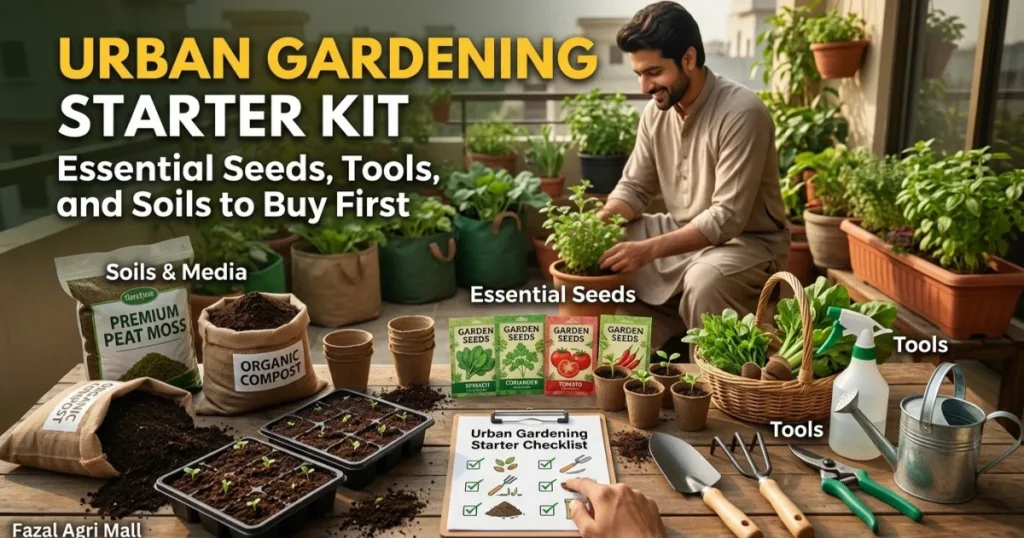
Urban Gardening Starter Kit: Essential Seeds, Tools and Soils to Buy First
Table of Contents
Urban gardening is a simple and rewarding way to grow fresh vegetables, herbs and flowers in limited spaces. Whether you live in an apartment, have a small rooftop or want to transform your balcony into a green space, the right starter kit can help you begin gardening with confidence.
For beginners in Pakistan, choosing the right seeds, gardening tools and soil is the first step toward a healthy and productive garden. You do not need expensive equipment or a large yard to get started. With a few essential supplies, proper watering and enough sunlight, you can grow fresh produce right at home.
In this guide, fazalagrimall explains what to buy first, how to choose suitable gardening supplies and how to create an affordable urban garden that thrives in small spaces.
What Is an Urban Gardening Starter Kit?
An urban gardening starter kit is a collection of basic supplies that helps beginners grow plants in compact environments such as balconies, rooftops, patios and small home gardens.
A practical starter kit usually includes:
- Vegetable and herb seeds suitable for your local climate
- Nutrient-rich potting soil or a growing medium
- Pots, containers or seedling trays
- A small hand trowel and gardening gloves
- A watering can or spray bottle
- Organic compost or a suitable plant fertilizer
Instead of buying every gardening product available, start with the essentials. You can add more tools and supplies as your gardening skills improve.
Choose the Best Seeds for Your Urban Garden
Seeds are the foundation of your garden. Beginners should choose easy-to-grow varieties that suit their available space, sunlight and local weather conditions.
Best Seeds for Beginners
Tomato seeds: Tomatoes are suitable for pots and containers when you choose a compact variety and provide enough sunlight and support.
Coriander seeds: Coriander is useful in Pakistani kitchens and can grow in shallow containers with suitable drainage.
Spinach seeds: Spinach is a practical option for small gardens, particularly during cooler growing conditions.
Chili seeds: Chili plants can grow successfully in containers with adequate sunlight, warmth and regular watering.
Radish seeds: Radishes are fast-growing root vegetables that can be rewarding for beginners when grown in sufficiently deep containers.
Lettuce seeds: Lettuce can grow in pots and window planters, especially when temperatures are suitable for the selected variety.
How to Buy Quality Seeds
Before purchasing seeds, check the following:
- Germination quality: Choose seeds from a reliable supplier with appropriate storage and handling.
- Expiry or packing date: Prefer fresh seeds with clear labeling.
- Growing season: Select varieties suited to your region and planting time.
- Space requirements: Choose compact or container-friendly varieties for balconies and rooftops.
- Seed instructions: Follow the recommended sowing depth, spacing and watering guidance.
For your first garden, select two or three varieties instead of planting too many crops at once. This makes it easier to monitor growth and learn what works best in your space.
Buy the Right Soil for Healthy Plant Growth
Good soil helps plants develop strong roots, absorb nutrients and maintain balanced moisture. Garden soil taken directly from the ground is not always suitable for pots because it may become compacted and restrict drainage.
Essential Soil and Growing Materials
Potting mix: A suitable potting mix provides a growing medium for container plants and supports root development.
Organic compost: Mature compost adds organic matter and can improve the structure and nutrient content of the growing medium.
Coco peat: Coco peat helps retain moisture and improves the texture of many container-growing mixes. It generally provides limited nutrients on its own.
Perlite: Perlite improves aeration and drainage when incorporated into an appropriate potting mix.
Garden soil: Garden soil can be useful in some outdoor beds, but it should not automatically be used as the sole growing medium in small containers.
How to Choose the Best Soil Mix
For many container vegetables, a practical starting point is a well-draining potting mix combined with mature compost. The exact proportions should depend on the crop, container size and ingredients available.
Avoid soil that remains waterlogged after watering. Excess moisture can deprive roots of oxygen and encourage root diseases.
Always choose containers with drainage holes and avoid using fresh manure directly around young plants because it can damage roots and introduce unwanted contaminants.
Essential Gardening Tools Every Beginner Should Buy
You do not need a professional gardening tool set to maintain a small home garden. A few reliable tools can handle most planting, watering and maintenance tasks.
Must-Have Gardening Tools
| Gardening tool | Main purpose |
| Hand trowel | Digging small holes and planting seedlings |
| Hand fork | Loosening soil and mixing compost |
| Watering can | Watering plants gently and evenly |
| Gardening gloves | Protecting hands during planting and maintenance |
| Pruning shears | Trimming damaged leaves and small branches |
| Spray bottle | Lightly moistening seed-starting mixes |
| Plant labels | Identifying seed varieties and planting dates |
Start with a hand trowel, watering can, gloves and a few plant labels. Add pruning shears when your plants grow and need trimming.
When buying gardening tools, look for comfortable handles, durable materials and a size that suits your garden. Small tools are generally more practical for balcony gardening than heavy equipment.
Select the Right Pots, Containers and Seedling Trays
Containers allow you to grow vegetables even when you do not have access to a traditional garden. They are ideal for balconies, terraces, rooftops and patios.
Consider these options:
- Plastic pots: Lightweight and convenient for everyday container gardening.
- Terracotta pots: Attractive containers that allow moisture to evaporate through their sides.
- Fabric grow bags: Useful for many vegetables because they provide drainage and airflow around roots.
- Seedling trays: Help you start seeds in an organized way before transplanting seedlings.
- Vertical planters: Make use of walls and limited spaces for suitable herbs and small plants.
Choose the container according to the plant’s mature size. Tomatoes and chilies generally require more root space than coriander or lettuce.
Always check for drainage holes. Place containers where they receive the sunlight required by the selected crop and ensure the rooftop or balcony can safely support their combined weight when filled with wet soil.
Use Organic Compost and Fertilizer Correctly
Healthy plants need more than water and sunlight. They also require essential nutrients throughout their growing cycle.
Organic compost improves the growing medium and adds organic matter, while a suitable fertilizer supplies nutrients that may be missing. Both can be useful when selected and applied correctly.
Follow these practical tips:
- Mix mature compost into your potting medium according to the crop’s needs.
- Choose a balanced fertilizer or a crop-specific product when additional nutrients are required.
- Follow the label’s recommended application rate.
- Avoid applying excessive fertilizer, which may damage roots or cause nutrient imbalances.
- Monitor leaf color and plant growth to identify possible nutrient problems.
For edible plants, use products labeled as suitable for food crops and follow all application and harvest instructions.
Remember that adding more fertilizer does not automatically produce healthier plants. Proper drainage, sufficient light and appropriate watering are equally important.
How to Start Urban Gardening at Home
Once you have purchased your essential supplies, follow these steps to establish your first urban garden.
Find the Best Location
Observe your balcony, rooftop or patio to determine how much direct sunlight it receives. Most fruiting vegetables need several hours of direct sunlight, while some leafy greens and herbs tolerate partial shade.
Prepare Your Containers
Clean your pots and ensure that water can drain freely. Fill them with an appropriate potting mix rather than tightly packed garden soil.
Sow the Seeds Properly
Read the instructions on each seed packet. Plant seeds at the recommended depth and spacing, then water gently to avoid washing them away.
Maintain Consistent Moisture
Check the growing medium regularly. Water when needed, keeping it appropriately moist without leaving roots in standing water.
Give Seedlings Enough Light
Place seedlings in a suitable location so they receive enough light for healthy development. Gradually acclimatize indoor-started seedlings before moving them outdoors permanently.
Monitor Growth and Pests
Inspect plants for yellowing leaves, damaged stems, insects and signs of nutrient deficiencies. Address problems early using suitable, crop-safe methods.
Harvest at the Right Time
Harvest leafy vegetables and herbs when they reach a suitable size. Pick vegetables according to the variety’s maturity guidance to encourage continued production where applicable.
Affordable Urban Gardening Starter Kit: What to Buy First
You can begin with a small collection of supplies and expand gradually. The following list prioritizes the items that are most useful for a beginner.
| Priority | Item to purchase | Why it matters |
| 1 | Vegetable or herb seeds | Determines what you can grow |
| 2 | Quality potting mix | Supports roots and water management |
| 3 | Three to five suitable containers | Provides space for initial plants |
| 4 | Hand trowel | Makes planting easier |
| 5 | Watering can | Helps maintain consistent moisture |
| 6 | Mature compost | Adds organic matter |
| 7 | Gardening gloves and labels | Improves comfort and organization |
You can postpone buying advanced equipment, large tool sets, grow lights and automated irrigation until your garden needs them.
For gardeners in Pakistan, it is also sensible to consider seasonal temperatures, local seed availability and the amount of space available before purchasing supplies. A simple, well-maintained garden is often more successful than an expensive collection of products used incorrectly.
Common Urban Gardening Mistakes to Avoid
Even a well-planned garden can struggle when basic growing requirements are overlooked.
- Overwatering plants: Check soil moisture before watering again.
- Choosing unsuitable seeds: Select crops according to season, climate and container size.
- Using poor-quality soil: Choose a growing medium that balances drainage and moisture retention.
- Overcrowding containers: Follow spacing recommendations to reduce competition for light, water and nutrients.
- Ignoring sunlight: Match each plant to the light conditions it needs.
- Applying too much fertilizer: Follow product instructions and avoid unnecessary applications.
- Buying unnecessary equipment: Focus your budget on the supplies that support healthy growth.
Avoiding these mistakes will help you build better gardening habits and make more effective use of your available space.
Frequently Asked Questions (FAQs)
1. What should I buy first for urban gardening?
Start with quality vegetable or herb seeds, a suitable potting mix, containers with drainage holes, a hand trowel and a watering can. You can add compost, gloves, labels and other tools as your garden grows.
2. Which seeds are easiest for urban gardening beginners?
Coriander, radish, spinach, lettuce and suitable compact chili varieties are practical options. The best choice depends on the season, sunlight, available container space and local climate.
3. What is the best soil for growing vegetables in pots?
A well-draining potting mix that retains sufficient moisture is a good starting point. Mature compost can improve its organic matter content, while coco peat or perlite may help adjust moisture retention and aeration.
4. Can I grow vegetables on a small balcony?
Yes. You can grow many herbs and vegetables in pots, grow bags and vertical planters. Choose compact varieties, provide adequate sunlight and use containers large enough for mature plants.
5. How much money do I need to start an urban garden?
The cost depends on the number and size of containers, seed varieties, soil quantity and tools you choose. Start with a few plants and basic supplies, then expand as your budget allows.
6. How often should I water plants in an urban garden?
There is no single watering schedule for every plant. Check the soil moisture, weather, container size and plant type. Containers may dry faster in hot weather, so inspect them more frequently during warm periods.
Final Thought
Starting an urban garden does not require a large outdoor space or a substantial investment. By choosing suitable seeds, quality soil, practical gardening tools and containers with proper drainage, you can turn even a small balcony or rooftop into a productive green space.
The key is to begin with a few manageable plants, understand their growing requirements and maintain a consistent care routine. As your experience increases, you can experiment with more vegetables, herbs and container arrangements.
fazalagrimall can be your starting point for exploring agricultural and gardening supplies that help you plan your garden more confidently. Choose your essentials wisely, nurture your plants patiently and enjoy the satisfaction of growing fresh greenery at home.
For quality seeds, gardening tools and soil supplies, contact fazalagrimall today and start building your own thriving urban garden with confidence.


No Comments