
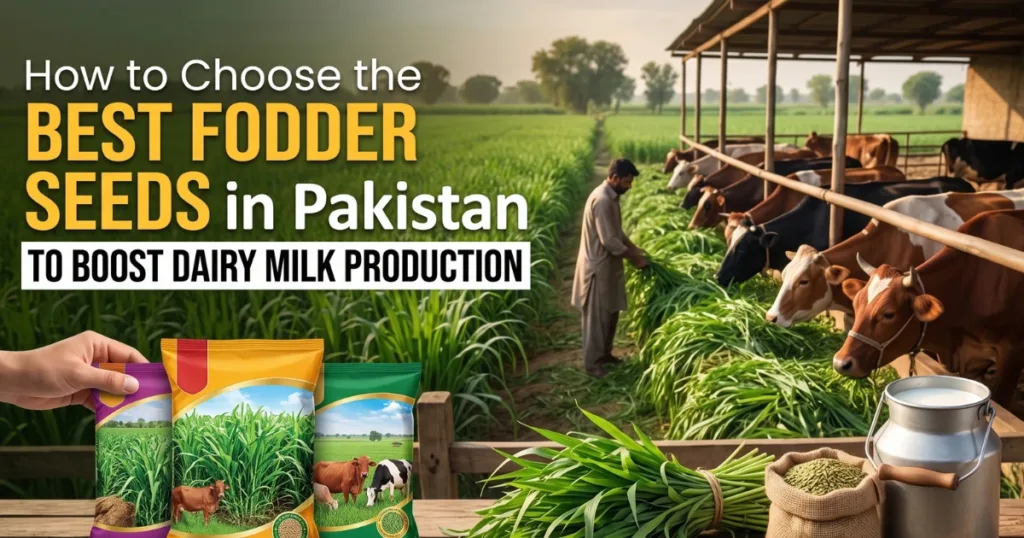
How to Choose the Best Fodder Seeds in Pakistan to Boost Dairy Milk Production
Table of Contents
For dairy farmers, choosing the best fodder seeds in Pakistan is one of the most important decisions for maintaining healthy livestock and improving milk production. Good-quality fodder provides essential nutrients, supports better digestion and can help farmers maintain a reliable supply of green feed throughout different seasons.
Pakistan has a wide range of fodder crops, including berseem, lucerne, oats, maize, sorghum, millet, cowpea and Napier grass. Punjab Agriculture identifies these crops as important fodder options and highlights the need for high-yielding and nutritious varieties to help reduce the gap between fodder demand and supply.
But with so many varieties available, how do you know which fodder seeds are right for your farm?
This guide explains how to select the right seeds, what factors to consider and which fodder crops can fit different dairy farming needs in Pakistan.
Why Fodder Quality Matters for Dairy Milk Production
Milk production depends on several factors, including animal breed, health, genetics, water availability, feeding practices and overall nutrition. Fodder is an important part of a balanced feeding program because it supplies roughage and nutrients needed by dairy animals.
The Punjab Agriculture Department notes that fodder crops can provide feed at a substantially lower cost than concentrate feed, making quality fodder an important part of livestock production.
High-quality fodder can help farmers:
- Maintain healthy dairy animals
- Provide nutritious green feed
- Improve feed intake
- Support normal digestion
- Reduce dependence on expensive purchased feed
- Maintain more consistent fodder availability
- Improve the overall efficiency of dairy farming
However, farmers should remember that fodder seeds alone do not guarantee higher milk production. Animals need a properly balanced diet, adequate clean water, minerals and appropriate veterinary care.
How to Choose the Best Fodder Seeds in Pakistan
Choosing fodder seeds should not be based only on price. Farmers should consider their land, climate, irrigation facilities, season, livestock requirements and expected yield.
Select Seeds According to the Season
The first step is choosing a crop suitable for the sowing season.
In Pakistan, commonly used summer fodders include maize, sorghum, millet, guar and sorghum-Sudan grass hybrids, while winter fodders include berseem, lucerne, oats and other cool-season crops.
For example:
- Berseem: Popular winter fodder
- Lucerne: Suitable for repeated cutting
- Oats: Useful winter fodder
- Maize: Popular for high-biomass production and silage
- Sorghum: Common summer fodder
- Millet: Suitable for warm-season production
Selecting the correct seasonal crop can help farmers maintain a more reliable supply of green fodder.
Look for High-Germination Seeds
Seed quality directly affects crop establishment. Poor-quality seeds may produce weak, uneven crops and reduce the amount of fodder available for livestock.
Before purchasing fodder seeds in Pakistan, check:
- Germination quality
- Seed purity
- Variety name
- Seed source
- Packaging condition
- Recommended sowing season
- Expiry or testing information where applicable
Good-quality seeds can provide more uniform crop establishment when combined with proper land preparation and suitable growing conditions.
Consider Fodder Yield
For commercial dairy farmers, yield is an important factor.
A high-yielding fodder variety can potentially provide more feed from the same area of land. The Punjab Fodder Research Institute lists numerous developed varieties of oats, berseem, lucerne, sorghum, maize, millet, Napier grass and other fodder crops, demonstrating the importance of variety selection in fodder production.
Instead of choosing seeds simply because they are popular, compare their:
- Green fodder yield
- Number of cuts
- Growth period
- Nutritional characteristics
- Disease tolerance
- Adaptability to local conditions
Choose Multi-Cut Fodder Where Suitable
Multi-cut fodder varieties can be particularly useful for dairy farmers who want repeated harvests from the same crop.
For example, lucerne and certain sorghum varieties can provide multiple cuts under suitable management. Pakistan’s Fodder Research Institute specifically conducts research on high-yielding and multi-cut fodder varieties.
Multiple cuts can help farmers maintain a more regular supply of fresh fodder and potentially reduce the need to purchase additional feed.
Match Seeds With Your Soil and Water Availability
Not every fodder crop performs equally well on every farm.
Before buying fodder seeds for dairy cattle, evaluate:
- Soil type
- Soil fertility
- Drainage
- Irrigation availability
- Temperature
- Rainfall
- Farm location
Farmers with reliable irrigation may have more options, while farms with limited water should select crops according to local recommendations and available moisture.
If you are uncertain about which variety suits your farm, consult a local agriculture extension specialist before making a large seed purchase.
Best Fodder Crops for Dairy Farming in Pakistan
Berseem
Berseem is one of the important winter fodders used for livestock feeding in Pakistan. It is valued as a nutritious green fodder and can provide multiple cuts under suitable conditions.
Punjab’s Fodder Research Institute has developed several berseem varieties, including Anmol, Punjab Berseem and Chenab Berseem.
Farmers looking for berseem seeds in Pakistan should select varieties based on local climate, sowing time, soil conditions and expected cutting performance.
Lucerne
Lucerne, also known as alfalfa, is another valuable fodder crop for dairy animals.
It can be particularly useful for farmers who want a longer-term fodder source with repeated harvesting. The Punjab Agriculture Department lists several lucerne varieties developed through local research programs.
Maize Fodder
Maize is widely used as a green fodder crop and is also an important crop for silage production.
It can provide substantial biomass when grown under appropriate conditions. Farmers interested in maize fodder seeds should select suitable varieties according to their production system and whether the crop will be used as fresh fodder or silage.
Sorghum
Sorghum is a popular warm-season fodder crop. Multi-cut sorghum varieties can be useful where repeated harvesting is part of the farm’s feeding strategy.
Punjab’s Fodder Research Institute lists several sorghum varieties, including Faisalabad Sorghum (Multi cut), Ausaf, Pak Sorghum and Sargodha Jawar-2022.
Oats
Oats are commonly included in winter fodder programs. They can provide green fodder during cooler months and can be combined with other winter fodders as part of a broader feeding plan.
Napier Grass
Napier grass can be considered by farmers looking for perennial or long-term fodder options. Punjab Agriculture lists locally developed Napier grass varieties, including Sargodha Napier-2022.
High-Yielding Best Fodder Seeds vs. Low-Quality Seeds
The difference between good and poor seed quality can become noticeable after germination.
Low-quality seeds may result in:
- Poor germination
- Uneven crop growth
- Lower plant population
- More weed competition
- Lower fodder availability
- Higher cost per unit of usable fodder
On the other hand, reliable seed combined with proper land preparation, irrigation, fertilization and harvesting practices can help farmers achieve better crop establishment.
Research and agricultural guidance in Pakistan emphasize the importance of improved varieties, proper sowing practices and good-quality seed for increasing fodder production.
How to Maintain a Year-Round Fodder Supply
One of the biggest challenges for dairy farmers is maintaining sufficient green fodder throughout the year.
Instead of depending on a single crop, farmers can develop a fodder calendar by selecting crops according to different growing seasons.
For example:
Winter: Berseem, lucerne and oats
Summer: Maize, sorghum, millet and other warm-season fodders
A combination of seasonal crops can help reduce the risk of fodder shortages.
Pakistan’s agricultural research programs specifically focus on developing and promoting different fodder crops to improve livestock feed availability.
Consider Fodder for Silage and Hay
Modern dairy farms can also preserve surplus fodder as silage or hay.
Maize and other suitable crops can be used for silage, while suitable thin-stemmed fodders can be preserved as hay when properly harvested and dried.
Preserving fodder can help farmers prepare for periods when fresh green fodder is less available.
The University of Veterinary and Animal Sciences highlights fodder selection, preservation, multi-cut varieties and farm mechanization as important considerations in modern fodder production.
Common Mistakes When Buying Fodder Seeds
Avoid these common mistakes when selecting fodder seeds in Pakistan:
Buying Only on Price
The cheapest seed may not always provide the best value. Consider germination, purity, yield potential and suitability for your farm.
Ignoring the Season
Planting a winter fodder crop at an unsuitable time can negatively affect establishment and yield.
Choosing the Wrong Variety
A variety that performs well in one region may not perform the same way under different soil, climate and irrigation conditions.
Buying Unreliable Seeds
Always purchase from a trustworthy seed source and check available information about the variety and seed quality.
Depending on One Fodder Crop
Using multiple suitable fodder crops can help reduce seasonal feed shortages.
Why Choose Fodder Seeds From fazalagrimall?
At fazalagrimall, farmers can explore agricultural products designed to support productive and efficient farming.
Choosing the right fodder seeds is an important step toward developing a dependable livestock feeding program. Whether you are a small farmer, livestock owner or commercial dairy farmer, selecting suitable seeds based on crop type, season, soil and farm requirements can make a significant difference.
For better results, combine quality seeds with proper soil preparation, timely sowing, irrigation, fertilization, harvesting and balanced animal nutrition.
FAQs About Best Fodder Seeds in Pakistan
1. Which fodder is best for dairy cows in Pakistan?
Berseem, lucerne, maize, sorghum, oats and other suitable fodder crops can be used for dairy animals. The best choice depends on season, soil, irrigation, climate and the farm’s feeding requirements.
2. Which are the best fodder seeds in Pakistan?
There is no single best seed for every farm. Berseem, lucerne, maize, sorghum, oats, millet and Napier grass are among the important fodder options used in Pakistan.
3. Can fodder increase milk production?
Nutritious and properly managed fodder can support animal nutrition and productivity, but milk production also depends on breed, health, genetics, water, minerals, concentrate feed and overall feeding management.
4. What is the best winter fodder in Pakistan?
Berseem, lucerne and oats are among the commonly used winter fodders in Pakistan. The suitable choice depends on local conditions and the farmer’s production system.
5. Which fodder is suitable for summer in Pakistan?
Maize, sorghum, millet, guar and sorghum-Sudan grass hybrids are among the warm-season fodder options used in Pakistan.
6. Where can I buy quality fodder seeds in Pakistan?
Farmers should purchase fodder seeds from reliable agricultural suppliers and check seed quality, variety information, germination, packaging and suitability for their local growing conditions. fazalagrimall can be explored for agricultural seed and farming products.
Final Thought
Choosing the best fodder seeds in Pakistan is about more than simply buying a seed packet. The right decision requires considering the crop’s season, yield potential, nutritional value, soil compatibility, water availability, cutting frequency and livestock requirements.
Berseem, lucerne, oats, maize, sorghum, millet and Napier grass each have different roles in a well-planned fodder system. By selecting suitable high-quality seeds and combining them with proper cultivation and feeding practices, farmers can build a more dependable source of nutritious livestock feed.
Looking for quality hybrid coriander seeds or expert farming solutions? Contact us at fazalagrimall today and find the right seeds for your commercial farming needs.



No Comments