
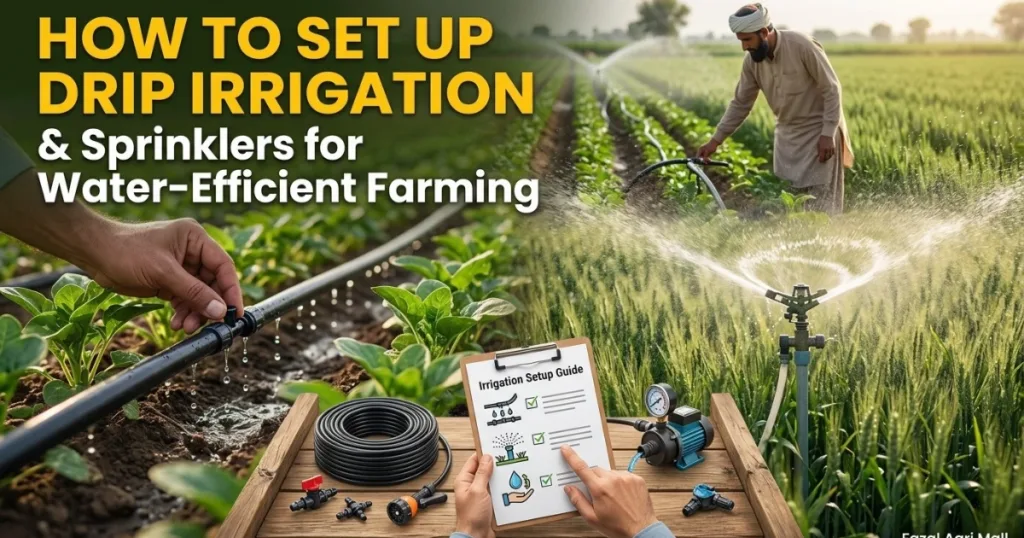
How to Set Up Drip Irrigation and Sprinklers for Water-Efficient Farming
Table of Contents
Water is one of the most valuable resources in agriculture, especially in Pakistan, where farmers often face rising irrigation costs, unpredictable rainfall and water shortages. Traditional irrigation methods can waste water through evaporation, runoff and uneven distribution. Fortunately, modern irrigation systems offer a smarter way to provide crops with the water they need.
Drip irrigation and sprinkler irrigation are two effective methods for improving water management, supporting healthy crop growth and making farming more efficient. Whether you grow vegetables, fruits, wheat, maize or other crops, choosing the right irrigation system can help you manage water more carefully and improve your farm’s productivity.
In this guide, fazalagrimall explains how to set up drip irrigation and sprinklers, choose the right equipment, avoid common installation mistakes and maintain an efficient irrigation system for long-term farming success.
What Is Water-Efficient Farming?
Water-efficient farming means applying the right amount of water at the right time and delivering it to crops with minimal waste. Instead of flooding an entire field, modern irrigation systems distribute water where it is most useful.
Two popular options are:
- Drip irrigation: Delivers water slowly near plant roots through pipes, tubing and emitters.
- Sprinkler irrigation: Sprays water over crops through sprinkler heads, similar to rainfall.
Both systems can help farmers improve irrigation management. However, their effectiveness depends on crop type, soil conditions, weather, water quality and proper installation.
Understanding Drip Irrigation and Sprinkler Systems
Drip Irrigation System
Drip irrigation supplies water directly to the root zone through small emitters. It is particularly useful for tomatoes, cucumbers, peppers orchards, tunnel farming and other crops planted in rows.
- Reduces evaporation and surface runoff when properly managed.
- Delivers water close to plant roots.
- Works well with targeted irrigation and fertigation.
Sprinkler Irrigation System
Sprinklers distribute water through pressurized pipes and spray heads. They are useful for many vegetables, nurseries, lawns, fodder crops and selected field crops.
- Covers larger areas with suitable sprinkler spacing.
- Can distribute water relatively uniformly.
- May be easier to adapt to crops grown across broad areas.
Which system should you choose? Drip irrigation is often a strong option for row crops orchards and water-sensitive vegetable production. Sprinklers may be more suitable when broader surface coverage is needed. In windy conditions, sprinkler water can drift, so system selection should account for local weather.
Benefits of Drip Irrigation and Sprinklers for Farmers
Installing a modern irrigation system can improve farm management in several ways.
Better Water Management
Drip irrigation targets the root zone, while properly designed sprinklers distribute water across the field. Both can reduce water losses compared with poorly managed surface irrigation.
Healthier Crop Growth
Consistent moisture helps plants develop roots, leaves, flowers and fruits. Avoiding excessive watering also reduces the risk of waterlogging and some root-related problems.
Reduced Weed Growth
Drip irrigation wets a smaller area of soil, which may limit weed growth between crop rows. Sprinklers generally wet a wider area, so their effect on weeds depends on the field and watering schedule.
Improved Irrigation Control
Farmers can adjust watering duration, frequency and flow according to crop growth stages, soil moisture and weather conditions.
Potential Savings in Labor and Costs
Once properly installed, an irrigation system can reduce repetitive manual watering. Actual savings depend on installation costs, pump energy, maintenance and the previous irrigation method.
Essential Equipment for Setting Up Drip Irrigation
Before installing a drip irrigation system, prepare the necessary components.
- Water source: A well, storage tank, canal supply or another reliable source.
- Pump: Supplies the pressure needed when gravity alone is insufficient.
- Filter: Removes particles that could block emitters.
- Mainline pipe: Carries water from the source to the field.
- Sub-main pipes: Distribute water to different sections.
- Drip lines or lateral pipes: Run alongside crop rows.
- Emitters: Release water at a controlled flow rate.
- Valves and pressure regulators: Help control flow and maintain suitable operating pressure.
- Fittings and connectors: Join pipes and prevent leakage.
- Fertilizer injector, if needed: Allows compatible fertilizers to be delivered through irrigation.
Choose equipment according to the field size, water quality, crop spacing, required flow rate and the manufacturer’s pressure specifications.
Step-by-Step Guide to Installing a Drip Irrigation System
Follow these steps to install a practical drip irrigation system on your farm.
Measure Your Field
Measure the field’s length and width, identify crop rows and check the slope. Draw a simple layout showing the water source, main pipes, sub-mains and drip lines. Proper planning helps prevent uneven water distribution.

Install the Pump and Filter
Connect the water pump if required, followed by suitable filtration and pressure-control equipment. Choose a filter according to the water source and emitter specifications. Clean water is essential for preventing blockages.
Lay the Mainline and Sub-Mains
Position the main pipe to carry water from the source to different sections of the field. Connect sub-main pipes to supply individual irrigation zones. Select pipe sizes according to the required flow, pressure and pipe length.

Install Drip Lines
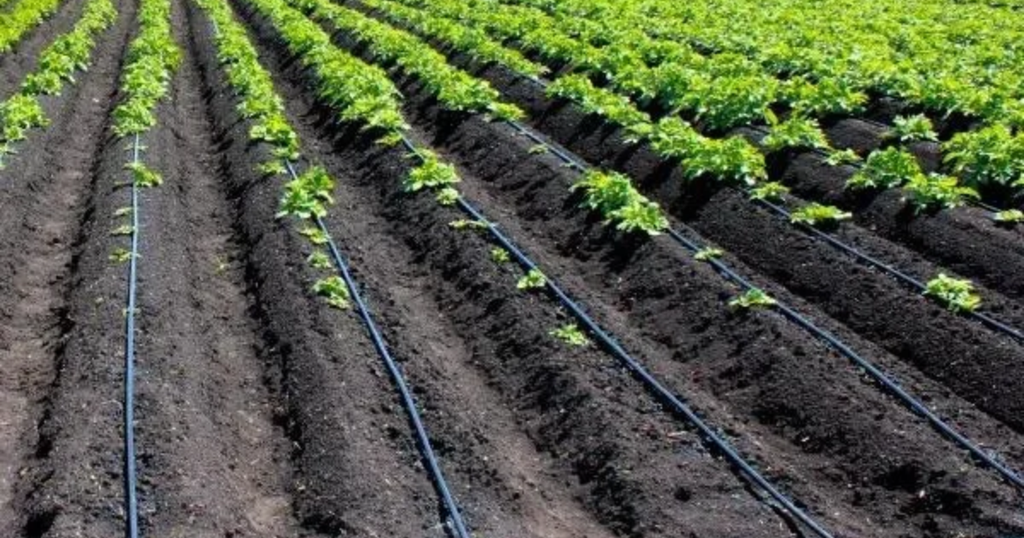
Lay drip tubing alongside crop rows and position emitters near the root zones. Use the recommended emitter spacing for your crop and soil type. Secure the lines to prevent movement and avoid sharp bends that restrict water flow.
Test the Entire System
Flush the pipes before connecting or operating emitters as directed by the manufacturer. Run the system and inspect for leaks, blocked emitters, pressure problems and uneven flow. Correct any issues before regular irrigation begins.
These installation steps follow established irrigation design principles: plan the layout, account for pressure and flow, filter the water and test the system before relying on it for crop production.
Step-by-Step Guide to Setting Up Sprinkler Irrigation
Sprinkler irrigation can be a practical choice for farmers who need to water a larger area or cover crops that are not ideally suited to individual drip lines.

Select the Right Sprinkler Type
Choose equipment according to crop height, field size, available water pressure and the required coverage.
- Impact sprinklers: Suitable for many open-field applications.
- Rotating sprinklers: Distribute water across a circular or overlapping coverage area.
- Micro-sprinklers: Provide localized watering for orchards, nurseries and selected vegetable crops.
Calculate Sprinkler Spacing
Arrange sprinkler heads so their wetted areas overlap enough to provide uniform coverage. The appropriate spacing depends on nozzle size, operating pressure, wind and the manufacturer’s coverage specifications.
Avoid placing sprinkler heads too far apart, as this can leave dry patches between them.
Install Pipes and Sprinkler Heads
Connect the mainline and sub-main pipes, install the required valves and position sprinkler heads at the planned locations. Secure all connections and ensure that pipes can handle the system’s operating pressure.
Adjust Water Pressure
Operate sprinklers within the pressure range recommended by the manufacturer. Low pressure may produce poor coverage, while excessive pressure can create fine droplets that are more vulnerable to evaporation and wind drift.
Test Water Distribution
Run the system and place several identical containers across the irrigated area. Compare the collected water to identify areas receiving too much or too little.
Adjust the spacing, pressure or operating time to improve uniformity.
Important: Drip emitters and conventional sprinklers generally require different flow rates and operating pressures. Use suitable controls and separate irrigation zones rather than assuming one setup will work for both systems.
Drip Irrigation vs Sprinkler Irrigation: Which Is Better?
| Feature | Drip irrigation | Sprinkler irrigation |
| Water delivery | Near plant roots | Sprays water over an area |
| Evaporation and wind loss | Generally lower | Can be higher, especially in wind |
| Best applications | Orchards, vegetables, row crops | Field crops, nurseries, selected vegetables |
| Weed management | Less soil between rows gets wet | A wider soil area may get wet |
| Maintenance | Filter and emitter cleaning | Nozzle, filter and pressure checks |
| Initial cost | Depends on layout and crop | Depends on pipework and sprinkler type |
| Main challenge | Clogged emitters | Uneven coverage, wind drift and pressure issues |
Drip systems can be more water-efficient because they target the root zone. Sprinklers can still perform well when designed and operated correctly. The best choice depends on the crop, soil, water supply, field conditions and overall installation cost.
How to Schedule Irrigation for Maximum Water Savings
Installing an efficient irrigation system is only the first step. Farmers must also decide how much water to apply and when to apply it.
Use these practical irrigation management tips:
- Check soil moisture: Examine the root zone before irrigating instead of following a fixed schedule blindly.
- Consider crop growth stages: Seedlings, flowering plants, fruiting crops and mature crops can have different water requirements.
- Adjust for weather: Hot, dry, windy conditions may increase water demand, while rainfall may reduce it.
- Consider soil type: Sandy soils drain quickly and may need shorter, more frequent irrigation. Heavier soils generally hold water longer.
- Monitor water flow: Check whether all rows receive adequate water and inspect for leaks.
- Avoid overwatering: Excess water can waste energy, leach nutrients and damage roots in poorly drained soil.
- Keep records: Record irrigation duration, rainfall, crop condition and observed soil moisture to improve future scheduling.
Where possible, use soil-moisture sensors or guidance from a local agricultural specialist to fine-tune irrigation schedules.
Common Irrigation Mistakes Farmers Should Avoid
- Even a modern irrigation system can waste water if it is poorly installed or maintained.
- Ignoring water filtration
- Dirt, sand and organic particles can block drip emitters. Install suitable filtration and clean it regularly.
- Using the wrong pressure
- Pressure that is too high or too low can affect water delivery. Use a pressure gauge and follow the equipment specifications.
- Choosing incorrect spacing
- Poorly spaced emitters or sprinklers can create uneven moisture and inconsistent crop growth.
- Watering without checking soil conditions
- Excessive irrigation wastes water and may harm roots. Adjust the schedule to actual crop needs.
- Neglecting regular maintenance
- Inspect pipes, joints, filters, valves and sprinkler nozzles. Repair leaks and flush lines as recommended.
Cost and Government Support for Efficient Irrigation in Pakistan
For Pakistani farmers, installation costs depend on acreage, crop spacing, water source, pumping requirements, equipment quality and field design. Request a site-specific quotation before investing.
Farmers in Punjab may also be eligible for government assistance under high-efficiency irrigation initiatives. The Punjab Agriculture Department lists support under the Punjab Resilient and Inclusive Agriculture Transformation (PRIAT) project, with a published cost-sharing structure of 75% government support for the first 7.5 acres and 60% for the next acreage slab up to 12.5 acres, subject to applicable project requirements and eligibility.
Check the latest scheme details and application requirements directly with the Punjab Agriculture Department or your local On-Farm Water Management office, as programme terms and availability may change.
Before purchasing equipment, compare the expected water savings, maintenance expenses, energy use and potential effect on crop yield. A properly designed system is more valuable than an inexpensive installation that cannot meet the farm’s irrigation requirements.
Frequently Asked Questions (FAQs)
1. What is the best irrigation system for water-efficient farming?
Drip irrigation is often an excellent option for orchards, vegetable crops and plants grown in rows because it delivers water close to the roots. Sprinkler irrigation may be better for crops that require broader field coverage. The best option depends on local conditions.
2. How do I set up a drip irrigation system on my farm?
Measure your field, plan the pipe layout, select a suitable pump if needed, install filtration and pressure controls, connect the mainline and drip tubing and test the system for leaks and uniform water delivery.
3. Is drip irrigation better than sprinkler irrigation?
Drip irrigation generally reduces evaporation and wind losses by applying water near plant roots. Sprinkler irrigation provides broader coverage but can lose more water in windy or hot conditions. Both systems can be effective when properly designed.
4. Which crops are suitable for drip irrigation?
Drip irrigation is suitable for many crops, including tomatoes, cucumbers, peppers, cotton, maize, sugarcane and fruit orchards. The design should match the crop’s root system, planting distance and water requirements.
5. How often should I run a drip irrigation system?
There is no single schedule for every farm. Irrigation frequency depends on soil texture, crop stage, temperature, rainfall, emitter flow rate and root-zone moisture. Check soil conditions and adjust the schedule to avoid overwatering.
6. Can farmers in Pakistan receive subsidies for drip and sprinkler irrigation?
Eligible farmers may receive government assistance through applicable high-efficiency irrigation programmes. Farmers should contact their local agriculture or On-Farm Water Management office to confirm current eligibility, application procedures and funding availability.
Final Thought
Water-efficient farming is an important step toward improving agricultural productivity and managing limited water resources. By understanding how to set up drip irrigation and sprinklers, farmers can make better decisions about irrigation equipment, water distribution and crop care.
The key to success is choosing a system that matches your crops, soil, field size and available water supply. Regular maintenance, proper irrigation scheduling and careful monitoring can help reduce unnecessary water use and support healthier crop growth.
Whether you are growing vegetables, managing an orchard or cultivating field crops, investing in the right irrigation practices can contribute to a more sustainable farming operation.
fazalagrimall supports farmers with practical agricultural knowledge to help them make informed decisions about crop production, irrigation, seeds, fertilizers and modern farming methods. Choose the right equipment, use water wisely and take a smarter approach to farming.
For expert guidance on irrigation equipment, agricultural products and water-efficient farming solutions, contact Fazal Agri Mall today and let us help you grow smarter and achieve better farming results.



Pingback: Best off-Season Cucumber & Tomato Farming Guide