
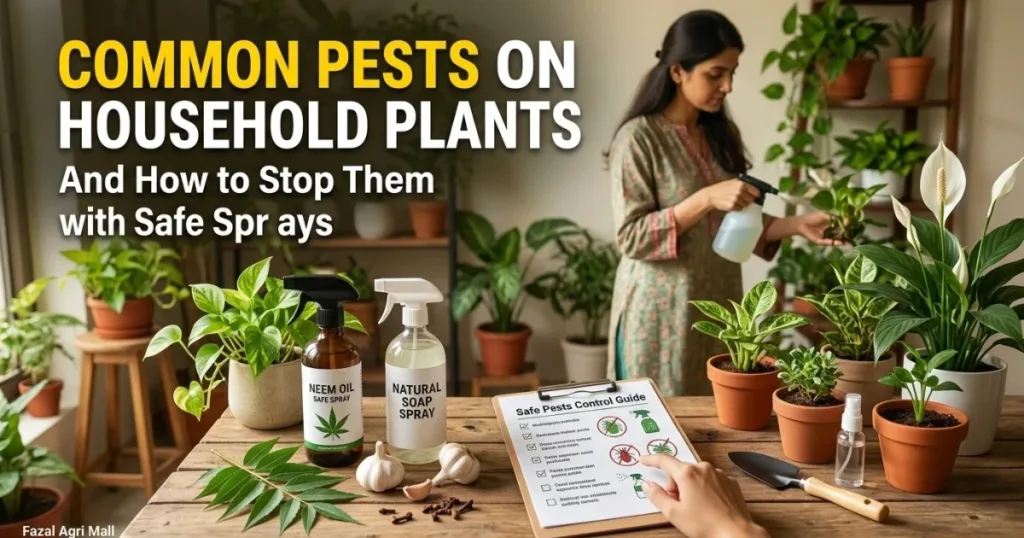
Common Pests on Household Plants and How to Stop Them with Safe Sprays
Table of Contents
Household plants bring beauty, freshness and a natural touch to indoor spaces. Whether you grow money plants, peace lilies, snake plants, aloe vera, succulents, or flowering plants, keeping them healthy requires regular care. However, one common problem that many plant lovers face is pest infestation.
Common pests on household plants can damage leaves, weaken roots, slow plant growth and even kill plants if left untreated. Small insects such as aphids, spider mites, mealybugs, whiteflies and fungus gnats often appear without warning. The good news is that you do not always need harsh chemicals to protect your indoor garden.
With proper identification, regular plant inspection and suitable safe sprays, you can control most household plant pests and prevent them from spreading.
In this guide, we will explore the most common indoor plant pests, how to identify them and which safe pest control sprays can help protect your plants.
Why Do Household Plants Attract Common Pests?
Indoor plants can attract pests for several reasons. Although they are protected from outdoor weather conditions, indoor environments can sometimes create ideal conditions for insects to multiply.
Here are some common reasons:
- Overwatering: Excess moisture creates favorable conditions for fungus gnats and other soil-related problems.
- Poor air circulation: Crowded plants and limited airflow can encourage pest problems.
- Dry indoor conditions: Low humidity and warm temperatures can encourage spider mite infestations.
- Infected new plants: Bringing home an infested plant can spread pests to your entire collection.
- Dirty leaves: Dust and plant debris can make it harder to notice early signs of pest activity.
Regular inspection and proper plant care are essential for preventing infestations.
7 Common Pests on Household Plants You Should Know
Identifying pests correctly is the first step toward protecting your indoor garden. Different insects cause different types of damage, so choosing the right treatment is important.
Aphids – Small Insects That Damage New Growth
Aphids are among the most common houseplant insects. These tiny, soft-bodied pests are usually green, black, yellow, or brown.
They commonly gather around new leaves, flower buds and tender stems. Aphids feed on plant sap, which can cause leaves to curl, turn yellow and become distorted.
Signs of aphid infestation:
- Small insects clustered around young leaves.
- Sticky residue on leaves and stems.
- Curled or damaged new growth.
- Slow plant development.
How to stop aphids:
Wash affected leaves with a gentle stream of water to remove visible insects. For persistent infestations, use a ready-to-use insecticidal soap labeled for indoor plants. Make sure the spray reaches the insects directly, especially underneath leaves.
Spider Mites – Tiny Pests That Create Webbing
Spider mites are extremely small pests that are difficult to notice without close inspection. They usually attack plants in warm, dry conditions.
These pests feed on plant cells, leaving tiny yellow or white spots on leaves. Heavy infestations may produce fine webs around leaves and stems.
Signs of spider mites:
- Fine webbing between leaves and stems.
- Tiny yellow or white spots on foliage.
- Leaves becoming dry or bronze-colored.
- Weak and unhealthy plant growth.
How to stop spider mites:
Rinse the leaves thoroughly with water, paying special attention to their undersides. Insecticidal soap or a suitable horticultural oil can help control spider mites when applied directly to affected areas.
Repeat treatments according to the product label because eggs and hidden mites may survive the first application.
Mealybugs – White Cotton-Like Insects
Mealybugs are easy to recognize because they look like small white cotton balls attached to leaves, stems and plant joints.
They feed on plant sap and weaken plants over time. Severe infestations can cause yellow leaves, stunted growth and premature leaf drop.
Signs of mealybug infestation:
- White cotton-like material on stems.
- Sticky leaves caused by honeydew.
- Yellowing and falling leaves.
- White insects hiding near leaf joints.
How to stop mealybugs:
Remove visible mealybugs using a cotton swab. Small infestations can sometimes be treated with carefully applied rubbing alcohol, but test a small area first because sensitive plants may suffer damage.
For larger infestations, use labeled insecticidal soap or horticultural oil. Check hidden areas because mealybugs often survive in plant crevices.
Whiteflies – Tiny Flying Insects
Whiteflies are small, white, winged insects that usually live underneath plant leaves. When you disturb an infested plant, they may fly away in a small cloud.
These pests feed on plant sap and can cause yellowing, reduced growth and leaf drop.
Signs of whitefly infestation:
- Tiny white insects flying around plants.
- Yellowing leaves.
- Sticky residue on foliage.
- Small insects underneath leaves.
How to stop whiteflies:
Use yellow sticky traps to monitor and catch adult whiteflies. Wash affected leaves and apply an indoor-plant-labeled insecticidal soap or horticultural oil when appropriate.
Pay particular attention to the undersides of leaves, where immature whiteflies are commonly found.
Fungus Gnats – Small Flies Around Plant Soil
Fungus gnats are tiny, dark-colored flies commonly seen flying around indoor plant pots.
Adult fungus gnats are generally more of a nuisance, but their larvae live in moist potting soil and feed on fungi and organic matter. Large populations may also damage delicate plant roots.
Signs of fungus gnats:
- Small black flies around plant pots.
- Insects crawling on the soil surface.
- Constant flying around indoor plants.
- Excessively wet potting soil.
How to stop fungus gnats:
Allow the upper layer of soil to dry between waterings when suitable for your plant species. Avoid keeping pots constantly wet.
Yellow sticky traps can help catch adult flies. For persistent infestations, use a suitable Bacillus thuringiensis israelensis (Bti) soil treatment labeled for fungus gnat larvae.
Remember that ordinary leaf sprays are not an effective solution for larvae living inside the soil.
Scale Insects – Hard-Shelled common Pests on Leaves and Stems
Scale insects attach themselves to plant stems and leaves. They may look like small brown, tan, or white bumps.
These insects feed on plant sap and can gradually weaken indoor plants. Some species also produce sticky honeydew.
Signs of scale insects:
- Small shell-like bumps on stems.
- Sticky leaves and plant surfaces.
- Yellowing foliage.
- Weak or slow plant growth.
How to stop scale insects:
Remove individual scales carefully using a soft brush or cotton swab. Horticultural oil or insecticidal soap may help control susceptible stages, especially young crawlers.
Repeated inspection is important because mature scale insects can be difficult to eliminate.
Thrips – Insects That Damage Leaves and Flowers
Thrips are very small, slender insects that feed on plant tissues. They can damage indoor flowering plants and decorative foliage.
Their feeding activity often leaves silvery patches, tiny dark spots and distorted leaves.
Signs of thrips infestation:
- Silvery or scratched-looking leaves.
- Tiny black spots on foliage.
- Damaged flower petals.
- Distorted new leaves.
How to stop thrips:
Remove heavily affected leaves and isolate the infected plant. Rinse the foliage and apply an indoor-plant-labeled insecticidal soap or horticultural oil if suitable.
Blue or yellow sticky traps can also help monitor adult thrips.
Best Safe Sprays for Household Plant Common Pest Control
Choosing the correct spray is essential for protecting your plants without causing unnecessary damage.
Here are some commonly used options for indoor plant pest management.
Insecticidal Soap Spray
Insecticidal soap is one of the most useful options for managing soft-bodied household plant pests.
It works through direct contact with insects and can help control:
- Aphids
- Mealybugs
- Spider mites
- Whiteflies
- Thrips
- Young scale insects
Always purchase a product specifically formulated and labeled for plants. Ordinary dishwashing liquid and household detergents are not reliable substitutes and may damage leaves.
Neem Oil Spray
Neem-based plant protection products are commonly used in home gardening.
Depending on the formulation, neem products may help manage certain insect pests by affecting their feeding and development.
They can be useful against some aphids, whiteflies and immature mealybugs.
Important: Neem oil is not a universal solution. Choose a product labeled for your target pest and plant species and follow the application instructions carefully.
Horticultural Oil Spray
Horticultural oils work mainly by coating and smothering susceptible insects and mites.
They can help manage:
- Spider mites
- Scale crawlers
- Mealybugs
- Whiteflies
- Aphids
Use only properly formulated horticultural oil products. Avoid spraying plants under intense sunlight or during high temperatures when the label advises against it.
Bti Treatment for Fungus Gnats
Bti is a biological control option specifically useful against fungus gnat larvae in potting soil.
Unlike ordinary insect sprays, Bti treatments are applied according to their product instructions to the growing medium.
They are especially helpful when fungus gnats continue appearing because of larvae living in moist soil.
How to Use Safe Sprays Without Damaging Your Plants
Even relatively low-risk pest control products can damage sensitive plants if used incorrectly.
Follow these practical steps:
Identify the pest
Check leaves, stems, new growth and soil before choosing a treatment. Using the wrong spray may not solve the problem.
Isolate the infected plant
Move affected plants away from healthy ones to reduce the risk of spreading pests.
Remove visible insects
Wash the plant gently and remove badly damaged leaves where necessary.
Test the spray
Apply the selected product to a small section of the plant first. Wait 24–48 hours and check for signs of leaf damage.
Apply the spray correctly
Follow the product label for dilution, application frequency, protective equipment and indoor-use precautions. Cover affected areas, including the undersides of leaves, where appropriate.
Inspect and repeat if necessary
Check your plants regularly. Many pest treatments require repeated applications because eggs or hidden insects may survive the initial treatment.
Natural Ways to Prevent Household Plant Common Pests
Preventing pests is easier than dealing with a large infestation. Good plant care can significantly reduce the chances of insects damaging your indoor garden.
Here are some useful prevention tips:
- Inspect new plants: Keep newly purchased plants separate for a short observation period before placing them near other plants.
- Avoid overwatering: Check soil moisture before watering.
- Clean plant leaves: Remove dust using a soft, damp cloth when suitable.
- Maintain proper humidity: Avoid extremely dry conditions, especially for plants vulnerable to spider mites.
- Remove dead leaves: Clean fallen foliage and plant debris from pots.
- Provide proper airflow: Avoid overcrowding your indoor plants.
- Check regularly: Inspect leaf undersides and stems every week.
These simple habits help maintain healthier plants and reduce the risk of recurring pest problems.
Common Mistakes to Avoid When Treating Indoor Plant Pests
Many plant owners unintentionally make pest infestations worse by using incorrect treatments.
Avoid these common mistakes:
- Using too much spray: Higher concentrations do not necessarily provide better pest control and may burn leaves.
- Ignoring leaf undersides: Many pests hide beneath foliage, where they can continue multiplying.
- Mixing different pesticides: Never combine products unless their labels specifically permit it.
- Spraying in direct sunlight: Some oils and soaps can cause leaf damage under unsuitable conditions.
- Treating without identifying pests: Different insects require different management approaches.
- Stopping treatment too early: One application may not eliminate every pest or its eggs.
- Using household detergents: Homemade soap mixtures can damage sensitive foliage.
A careful and consistent approach is usually more effective than repeatedly applying different sprays.
Frequently Asked Questions (FAQs)
1. What are the most common pests on household plants?
The most common household plant pests include aphids, spider mites, mealybugs, whiteflies, fungus gnats, scale insects and thrips. These pests can damage leaves, stems, roots and flowers.
2. What is the safest spray for indoor plants?
A properly formulated insecticidal soap is a commonly used option for controlling several soft-bodied plant pests. However, always check the product label and test it on a small area before treating the entire plant.
3. Does neem oil kill pests on houseplants?
Neem-based products can help control certain plant pests, depending on their formulation and application. They may work against some aphids, whiteflies and immature insects, but they are not effective against every pest.
4. How often should I spray my indoor plants for pests?
Treatment frequency depends on the pest, plant species and product formulation. Follow the manufacturer’s label rather than applying sprays daily or using excessive amounts.
5. How can I prevent bugs from attacking my indoor plants?
Inspect new plants, avoid overwatering, clean leaves, remove dead foliage, maintain suitable airflow and regularly check for early signs of insects.
6. Can dish soap be used to kill bugs on houseplants?
Household dish soaps and detergents are not recommended substitutes for formulated insecticidal soap. Their ingredients can damage plant leaves, especially when used in excessive concentrations.
Final Thought
Keeping household plants healthy requires more than regular watering and sunlight. Identifying pests early, understanding their behavior and choosing suitable pest control treatments can make a significant difference in maintaining a beautiful indoor garden.
From aphids and spider mites to mealybugs and fungus gnats, every pest requires the right management approach. Use properly labeled sprays, maintain good plant hygiene and inspect your plants regularly to prevent infestations from spreading.
At fazalagrimall, we believe that healthy plants begin with proper care, quality gardening supplies and informed growing practices. Give your household plants the attention they deserve and enjoy a greener, healthier indoor environment throughout the year.
For expert gardening advice and quality plant protection products, contact fazalagrimall today and let us help you keep your household plants healthy, fresh and pest-free!

No Comments