
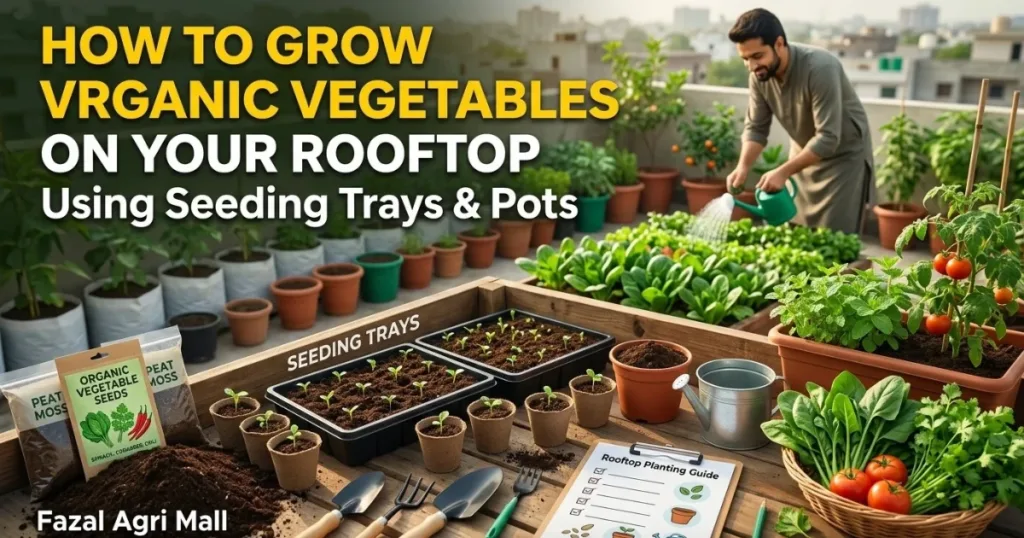
How to Grow Organic Vegetables on Your Rooftop Using Seeding Trays & Pots
Table of Contents
Growing fresh vegetables at home is easier than ever, even if you live in a city with limited outdoor space. With the right seeding trays, pots organic soil and proper sunlight, you can turn your rooftop into a productive vegetable garden and enjoy fresh, homegrown produce throughout the growing season.
For gardening enthusiasts and families in Pakistan, rooftop vegetable gardening is a practical way to grow seasonal vegetables, make better use of available space and reduce dependence on store-bought produce. Whether you want to grow tomatoes, chillies, spinach, coriander or lettuce, starting with seeding trays and suitable pots can help you build a healthy garden from scratch.
In this guide, fazalagrimall explains how to start seeds, prepare containers, maintain organic soil and care for rooftop vegetables for a successful harvest.
Why Grow Organic Vegetables on Your Rooftop?
Rooftop gardening allows you to grow vegetables without needing a traditional garden or a large piece of land. It is especially useful for homeowners living in apartments and urban areas.
Here are some important benefits:
- Fresh vegetables at home: Harvest vegetables when they are ready to eat.
- Better use of space: Grow different crops in pots, containers and vertical planters.
- Control over growing methods: Use compost, suitable organic fertilizers and natural pest-management practices.
- Lower gardening costs: Reuse suitable containers and save seeds from selected open-pollinated varieties.
- A greener living space: Plants add greenery and make your rooftop more enjoyable.
Organic gardening does not automatically mean pest-free or chemical-free produce. Healthy soil, careful watering, suitable growing conditions and responsible pest management all play important roles.
Choose the Right Seeding Trays for Starting Vegetables
Seeding trays are an excellent starting point for vegetables that benefit from being raised as seedlings before transplanting. They help organize young plants, use seed-starting mix efficiently and make it easier to monitor germination.
How to Select a Suitable Seeding Tray
When choosing trays, consider the following features:
- Drainage holes: Prevent excess water from collecting around young roots.
- Cell size: Small cells are suitable for many quick-growing seedlings, while larger cells provide more room for crops that stay in trays longer.
- Durable material: Reusable trays can reduce waste when cleaned properly between growing cycles.
- Easy transplanting: Individual cells help you move seedlings without disturbing their roots too much.
Tomatoes, chillies, cabbage and broccoli are commonly started in trays. Root crops such as carrots and radishes are usually better sown directly into their final containers because transplanting can disturb their roots.
Tip: Use clean trays and a light, well-draining seed-starting mix rather than heavy garden soil. Dense soil can restrict drainage and make it harder for delicate seedlings to emerge.
Select the Best Pots for Rooftop Vegetable Gardening
After seedlings develop strong roots and true leaves, many can be transplanted into pots or other permanent containers. Choosing the right container is important because vegetables need enough space for their roots to grow.
| Vegetable | Suggested Container Depth | Sunlight |
| Lettuce | 15–20 cm | 4–6 hours |
| Coriander | 15–20 cm | 4–6 hours |
| Spinach | 15–20 cm | 4–6 hours |
| Chillies | 25–30 cm | 6–8 hours |
| Tomatoes | 30–45 cm | 6–8 hours |
| Radishes | 15–20 cm | 4–6 hours |
These are practical starting guidelines. Requirements vary by variety, climate and container width. Fruiting vegetables generally need more direct sunlight than leafy crops.
What Makes a Good Vegetable Pot?
- Select containers with sufficient drainage holes.
- Use food-safe containers intended for growing edible plants.
- Choose wider pots for crops that spread or produce several plants.
- Avoid containers that become excessively hot in direct summer sun.
- Ensure your rooftop can safely support the weight of wet soil, pots and water.
Do not place gravel at the bottom of pots as a substitute for drainage holes. Use an appropriate growing mix throughout the container and allow excess water to drain freely.
Prepare Organic Soil for Healthy Vegetable Growth
Healthy soil is the foundation of a productive rooftop vegetable garden. Plants growing in pots have limited access to nutrients, so you need a growing medium that holds moisture, drains well and supports strong root development.
Best Soil Mix for Rooftop Gardening
A simple starting mix is:
- 1 part good-quality garden soil
- 1 part mature, well-decomposed compost
- 1 part coco peat or another suitable, lightweight growing material
Mix the ingredients thoroughly and adjust the blend if it retains too much water or dries out too quickly. Use clean ingredients and avoid fresh manure, which may damage plants and contaminate edible crops.
Compost adds organic matter and nutrients, while coco peat improves moisture retention. The growing medium should remain loose rather than compacted.
How to Maintain Organic Soil
- Mix mature compost into the growing medium before planting.
- Check soil moisture regularly, especially during hot weather.
- Add a suitable organic fertilizer when plants need additional nutrients.
- Remove dead leaves and diseased plant material.
- Refresh depleted potting mix between growing cycles.
Remember that organic fertilizer is not automatically harmless in excessive amounts. Follow the product label and avoid overfeeding plants.
Select the Best Vegetable Seeds for Your Rooftop Garden
Choosing appropriate seeds is essential for growing organic vegetables successfully. Beginners should start with crops that suit their available sunlight, container size and local growing season.
Here are some popular options for a home kitchen garden in Pakistan:
| Vegetable | Best Growing Method | General Growing Season in Pakistan |
| Spinach (palak) | Direct sowing or trays | Cool season |
| Coriander (dhania) | Direct sowing | Mainly cool season |
| Radish (mooli) | Direct sowing | Cool season |
| Lettuce | Trays or direct sowing | Cool weather |
| Tomato | Seeding trays | Depends on region and variety |
| Green chilli | Seeding trays | Warm conditions |
| Cucumber | Direct sowing or careful transplanting | Warm season |
| Fenugreek (methi) | Direct sowing | Mainly cool season |
Planting dates vary with your location, elevation and temperature. In Punjab, extreme summer heat can stress many vegetables, so plan cool-season crops for suitable cooler periods and warm-season crops for temperatures they can tolerate.
Pro tip: Read the seed packet before sowing. It should provide guidance on planting depth, spacing, germination and the recommended season.
How to Sow Seeds in Seeding Trays Step by Step
Proper seed sowing gives young plants a better chance of developing strong roots and healthy leaves.
Fill the Tray
Fill each cell with a clean, lightweight seed-starting mix. Moisten it before planting so the seeds have consistent access to moisture.
Sow Seeds at the Correct Depth
Follow the packet instructions. Small seeds usually need shallow sowing, while larger seeds can be planted deeper. Avoid burying tiny seeds too deeply.
Water Gently
Use a fine spray or gentle watering method to keep the mix moist without washing seeds out of their cells.
Provide Suitable Light
Once seedlings emerge, give them adequate light and airflow. Avoid keeping them in dark places where they may become tall and weak.
Transplant at the Right Time
Move seedlings when they are sturdy and suitable for transplanting, following the crop’s needs. Handle them gently and avoid damaging their roots.
Watering Tips for Organic Rooftop Vegetables
Water management is especially important on rooftops because pots can dry out faster than garden beds. Strong sunlight, hot winds and small containers can increase moisture loss.
Follow these watering practices:
- Check the growing medium daily during hot weather.
- Water thoroughly when needed, allowing excess water to drain.
- Water near the soil rather than repeatedly soaking the leaves.
- Water in the morning when practical.
- Use mulch around established plants to help reduce evaporation.
- Avoid leaving roots sitting in stagnant water.
Do not follow a fixed watering schedule without checking the soil. A small pot in hot weather may need water much sooner than a large pot in mild weather.
Give Your Rooftop Vegetables Enough Sunlight
Sunlight supports photosynthesis, healthy leaves and fruit production. However, the ideal amount depends on the crop.
Tomatoes, chillies and cucumbers generally perform best with around six to eight hours of direct sunlight. Leafy vegetables such as spinach and lettuce may tolerate less sunlight, particularly when temperatures are high.
To improve your rooftop setup:
- Observe how much direct sunlight the roof receives.
- Place sun-loving crops in the brightest suitable area.
- Use temporary shade netting when intense heat threatens plants.
- Protect seedling trays from harsh midday conditions when necessary.
- Keep taller plants from shading smaller crops.
During Pakistan’s hottest months, a suitable shade net can help protect sensitive plants from excessive heat. However, too much shade can reduce growth and fruit production.
Protect Organic Vegetables From Pests and Diseases
Rooftop vegetable gardens can still attract aphids, whiteflies, caterpillars and other pests. Prevention and early detection are better than waiting until the plants are badly damaged.
Natural Pest-Management Tips
- Inspect leaves, stems and new growth regularly.
- Remove badly diseased leaves using clean tools.
- Use insect-proof netting where appropriate.
- Remove weeds and plant debris that may shelter pests.
- Encourage beneficial insects by maintaining a diverse garden.
- Identify the pest before choosing a treatment.
If you use an organic pest-control product, check that it is suitable for the specific crop and pest. Follow the label directions, including precautions for edible plants and the required interval before harvest.
Organic gardening means using responsible growing and pest-management practices, not assuming that every natural substance is safe in every situation.
Common Rooftop Vegetable Gardening Mistakes to Avoid
Avoiding a few common mistakes can make your gardening experience much more successful.
| Common Mistake | Better Approach |
| Using pots that are too small | Match container size to the mature plant |
| Overwatering seedlings | Keep the mix moist, not waterlogged |
| Using heavy, compacted soil | Choose a suitable, well-draining growing mix |
| Planting in the wrong season | Follow local weather and seed instructions |
| Overcrowding seedlings | Thin or transplant to provide enough space |
| Ignoring drainage | Use pots with clear drainage holes |
| Applying too much fertilizer | Follow the recommended application rate |
| Placing heavy pots anywhere on the roof | Check structural load capacity and distribute weight safely |
A successful garden depends on balancing water, sunlight, nutrients, space and temperature. Start with a few containers, learn how your plants respond and expand gradually.
How to Harvest Rooftop Vegetables for Better Results
Harvesting at the right stage helps you enjoy better flavor and can encourage continued production in some crops.
- Spinach and lettuce: Harvest outer leaves as plants grow, leaving the growing point intact when appropriate.
- Coriander: Cut leafy stems when the plants are established and before excessive flowering.
- Radishes: Harvest when roots reach the size recommended for their variety.
- Tomatoes: Pick fruits when they develop the appropriate color and maturity for the variety.
- Green chillies: Harvest at the desired size, using clean scissors if stems are difficult to remove by hand.
For a steady supply, sow fast-growing crops in small batches every few weeks when the season permits. This approach, known as succession planting, can help you avoid harvesting everything at once.
Frequently Asked Questions (FAQs)
1. Can I grow organic vegetables on my rooftop in Pakistan?
Yes. You can grow vegetables such as spinach, coriander, chillies, tomatoes, lettuce and radishes in suitable pots or grow bags. Choose crops according to the local season, available sunlight and rooftop temperature.
2. Which seeding trays are best for growing vegetables?
Trays with individual cells, good drainage and enough room for seedlings to develop are a useful choice. Select the cell size according to the crop and transplant seedlings before they become overcrowded.
3. What is the best soil mix for rooftop vegetable gardening?
A lightweight, well-draining mixture containing suitable growing medium and mature compost is a good starting point. The exact blend should provide adequate moisture retention without waterlogging the roots.
4. How often should I water rooftop vegetables?
Check the soil moisture daily, especially in hot weather. Water when needed and allow excess water to drain. The frequency depends on the plant, container size, sunlight, wind and temperature.
5. Which vegetables grow best in pots for beginners?
Spinach, coriander, lettuce, radishes and chillies are useful options for beginners. Tomatoes can also grow well in sufficiently large containers with adequate sunlight, support and nutrients.
6. How can I protect rooftop vegetables from pests without harsh chemicals?
Inspect plants regularly, remove affected leaves, use suitable insect-proof netting and identify pests before selecting a treatment. Good airflow, clean containers and appropriate watering can also help reduce certain gardening problems.
Final Thought
Growing organic vegetables on your rooftop is a rewarding way to make limited space productive. With the right seeding trays, suitable pots, healthy growing medium, quality seeds and consistent care, you can grow fresh vegetables at home throughout the appropriate growing seasons.
Start small, choose crops suited to your local climate and give each plant the space and care it needs. As your experience grows, you can expand your garden with more varieties and improve your harvesting routine.
fazalagrimall supports your gardening journey with agricultural products and growing essentials to help you plan your next planting season. Explore suitable seeds, gardening supplies and other agricultural products to take the first step toward a greener, more productive rooftop garden.
For quality seeds, seeding trays, pots and gardening essentials, contact fazalagrimall today and start growing fresh, healthy vegetables on your rooftop.


No Comments