
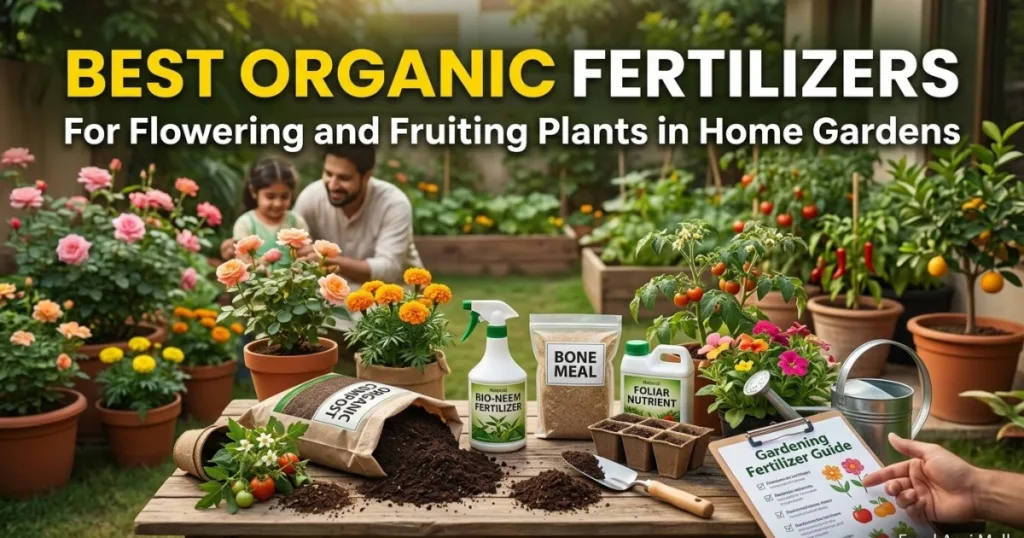
Best Organic Fertilizers for Flowering and Fruiting Plants in Home Gardens
Table of Contents
Growing healthy plants with colorful flowers and delicious fruits starts with the right nutrition. Whether you maintain a small balcony garden, a rooftop vegetable patch or a backyard full of flowering plants, choosing the best organic fertilizers for flowering and fruiting plants can help improve soil health, encourage blooming and support better fruit development.
Organic fertilizers provide essential nutrients while improving soil structure and supporting beneficial microorganisms. Unlike a one-size-fits-all approach, the best fertilizer depends on your plant type, growth stage, soil condition and watering routine.
In this guide by fazalagrimall, you will discover the best natural fertilizers for home gardens, how to use them correctly and practical tips to help your plants grow stronger and produce more flowers and fruits.
Why Are Organic Fertilizers Important for Flowering and Fruiting Plants?
Flowering and fruiting plants need a balanced supply of nitrogen, phosphorus, potassium and micronutrients to grow properly. Organic fertilizers release nutrients at varying rates and can improve the soil’s ability to retain moisture and support healthy root development.
Here are some major benefits of using organic fertilizers in your home garden:
- Encourage healthy flowering: Proper nutrition supports flower bud development and blooming.
- Support fruit production: Potassium and other essential nutrients help plants develop healthy fruits.
- Improve soil fertility: Compost and other organic materials add organic matter to the soil.
- Promote stronger roots: Healthy soil creates better conditions for root growth and nutrient absorption.
- Support beneficial soil life: Organic matter feeds microorganisms that contribute to soil health.
- Reduce dependence on synthetic fertilizers: Home gardeners can recycle suitable organic materials and build long-term soil fertility.
Remember that organic fertilizers are not automatically nutrient-balanced. Applying too much, even in organic form, can harm plants or contribute to nutrient runoff.
7 Best Organic Fertilizers for Flowering and Fruiting Plants
The following options are useful for many home gardens. Choose based on your plants’ needs rather than applying every fertilizer at once.
Well-Rotted Compost
Compost is one of the most versatile organic fertilizers for flowering and fruiting plants. It improves soil texture, adds organic matter and supplies nutrients gradually.
Best for: Roses, marigolds, tomatoes, chillies, cucumbers and other garden vegetables.
How to use it: Mix mature compost into the soil before planting or spread a thin layer around established plants, keeping it away from stems. For container plants, use a suitable potting mix with a modest amount of finished compost.
Why it works: Compost supports long-term soil fertility and improves the growing environment for roots.
Vermicompost (Worm Castings)
Vermicompost is produced when earthworms break down suitable organic materials. It contains organic matter and plant nutrients and is a useful addition to many container and garden soils.
Best for: Flowering pots, tomato plants, chilli plants, herbs and balcony gardens.
How to use it: Add a small amount to the growing medium or apply it as a light top dressing according to the product label.
Why it works: Vermicompost can improve soil quality and provide a gradual supply of nutrients without relying on a concentrated synthetic fertilizer.
Bone Meal
Bone meal is an animal-derived fertilizer that supplies phosphorus and calcium. It is commonly used when preparing soil for plants that benefit from an adequate phosphorus supply.
Best for: Flowering ornamentals and selected fruiting vegetables when soil conditions indicate a need.
How to use it: Follow the package directions and incorporate it into the soil as recommended. Bone meal is not a quick solution for every flowering problem and phosphorus may already be sufficient in some soils.
Why it works: Phosphorus is essential for energy transfer, root development and reproductive growth. However, adding extra phosphorus does not necessarily produce more flowers if the soil already contains enough.
Banana Peels and Banana Peel Compost
Banana peels contain potassium and other minerals, making them a popular ingredient in home composting. However, fresh peels release nutrients slowly and should not be treated as an instant potassium fertilizer.
Best for: Home gardeners who compost kitchen waste for flowering plants and fruiting vegetables.
How to use it: Chop banana peels into small pieces and add them to a properly managed compost pile. Use the finished compost around plants.
Why it works: Recycling kitchen scraps reduces waste and contributes organic matter and nutrients to the garden when composting is done properly.
Gardening tip: Avoid burying large amounts of fresh banana peels in pots because they can attract pests, smell unpleasant or decompose too slowly.
Seaweed-Based Organic Fertilizer
Seaweed-based fertilizers are available in liquid and dried forms. Depending on the product, they may supply small amounts of nutrients and compounds that support plant growth.
Best for: Flowering plants, tomatoes, peppers and other garden crops when used as a supplement.
How to use it: Dilute liquid products exactly as directed on the label. Apply at the recommended frequency and avoid increasing the concentration to encourage faster growth.
Why it works: Seaweed products can complement a balanced plant nutrition plan, but they should not replace a complete fertilizer when major nutrients are lacking.
Well-Decomposed Animal Manure
Properly composted cow or other suitable livestock manure can add organic matter and plant nutrients to garden soil. Its nutrient content varies according to the animal, bedding, storage and composting process.
Best for: Outdoor flower beds, garden vegetables and fruiting plants grown in prepared soil.
How to use it: Use fully composted manure and follow appropriate application guidance. Never place fresh manure directly against stems or use it carelessly around edible crops.
Why it works: Composted manure can improve soil structure and contribute nutrients over time.
Organic Fertilizer Blends
Commercial organic fertilizer blends combine ingredients to supply selected plant nutrients. Some are formulated for vegetables, flowers, fruit trees or container plants.
Best for: Gardeners who want a convenient, labelled product with clear application instructions.
How to use it: Check the nutrient analysis, crop suitability, application rate and whether the product is certified or registered where applicable. Apply according to the label.
Why it works: A well-selected blend can help address nutrient needs more predictably than relying on a single kitchen scrap.
Which Organic Fertilizer Is Best for Flowers and Fruits?
Different plants have different nutritional requirements. Use this quick guide to select a suitable option.
| Plant or purpose | Suitable organic fertilizer |
| Roses and flowering plants | Compost, vermicompost |
| Tomatoes and chillies | Compost, balanced organic fertilizer |
| Cucumbers and gourds | Compost, suitable organic fertilizer blend |
| Fruit trees | Mature compost, well-rotted manure |
| Container gardening | Vermicompost, finished compost |
| Plants needing additional phosphorus | Bone meal, if a deficiency is confirmed |
| General garden soil improvement | Mature compost |
Organic fertilizer nutrient levels vary, so follow product instructions and consider soil testing before adding concentrated nutrient sources.
Extension+2
Understanding NPK for Flowering and Fruiting Plants
NPK stands for nitrogen (N), phosphorus (P) and potassium (K). These three nutrients perform different roles in plant development.
Nitrogen (N) — Leaf and stem growth
Nitrogen helps plants develop healthy green foliage. Too much can encourage excessive leaf growth at the expense of flowers and fruits.
Phosphorus (P) — Roots and plant development
Phosphorus supports root growth and energy transfer. It is essential for reproductive development, but extra phosphorus will not automatically increase blooms.
Potassium (K) — Overall plant health and fruit development
Potassium supports water regulation, enzyme activity and many processes involved in fruit development and plant resilience.
The best fertilizer is one that supplies the nutrients your plants actually need, rather than one with the highest NPK numbers.
How to Apply Organic Fertilizer in a Home Garden
Correct application is just as important as choosing the right product.
- Prepare the soil: Mix mature compost into garden soil before planting to improve its structure.
- Feed according to plant growth: Use a suitable fertilizer when plants are actively growing, following the label.
- Apply around the root zone: Spread granular fertilizers around the plant rather than piling them against stems.
- Water appropriately: Water after applying products when the label recommends it and avoid waterlogging pots.
- Monitor plant health: Observe leaf color, flower production and fruit development before deciding whether another application is needed.
- Avoid overfertilizing: Excess nutrients can damage roots, increase leafy growth or accumulate in containers.
For edible crops, use properly composted manure and follow food-safety guidance. Never assume that a natural material is safe simply because it is organic.
CSU Extension+1
Organic Fertilizer Tips for Pakistani Home Gardens
Pakistan’s home gardeners often grow roses, hibiscus, tomatoes, chillies, cucumbers, lemons and seasonal vegetables in pots, courtyards and rooftop gardens.
Use these practical tips to get better results:
- For rooftop gardening: Use lightweight, well-draining potting mixes and avoid heavy applications of wet compost that add unnecessary weight.
- For summer growing: Check container moisture regularly because pots can dry quickly in hot weather.
- For flowering plants: Avoid excessive nitrogen if plants are producing plenty of leaves but few flowers.
- For fruiting vegetables: Maintain consistent watering and provide adequate sunlight alongside appropriate nutrition.
- For kitchen gardens: Compost suitable fruit and vegetable scraps rather than applying large amounts of fresh waste directly to pots.
- For long-term soil health: Combine suitable organic fertilizers with mulch, good drainage and regular observation.
Remember that insufficient sunlight, poor pollination, pests and irregular watering can also reduce flowering and fruit production. Fertilizer alone cannot correct every gardening problem.
Frequently Asked Questions (FAQs)
1. What is the best organic fertilizer for flowering plants?
Mature compost and vermicompost are good general choices for improving soil quality and providing nutrients. Plants with specific nutrient deficiencies may need a targeted organic fertilizer.
2. Which organic fertilizer is best for fruiting plants?
Compost, vermicompost and suitable organic fertilizer blends can support fruiting plants. Choose a product based on the crop’s needs and soil nutrient levels.
3. Can I use banana peels as fertilizer for flowering plants?
Yes, banana peels can be added to compost. Composting them before use is generally more practical than placing large amounts of fresh peel directly into pots.
4. How often should I apply organic fertilizer to potted plants?
It depends on the fertilizer, potting mix, plant species and growing season. Follow the product label and avoid frequent applications unless the plant’s requirements justify them.
5. Does organic fertilizer help plants produce more flowers?
It can help when improved nutrition addresses a nutrient deficiency. However, sunlight, pruning, watering, plant variety and overall plant health also influence flowering.
6. Is organic fertilizer safe for vegetables and fruit plants?
Suitable organic fertilizers can be used for edible crops when handled and applied correctly. Use mature compost, follow product directions and observe food-safety precautions when using manure-based products.
Final Thought
Choosing the best organic fertilizers for flowering and fruiting plants in home gardens is about understanding your plants and maintaining healthy soil. Compost and vermicompost are useful starting points, while bone meal, seaweed products and organic fertilizer blends can serve specific purposes when appropriate.
Combine balanced nutrition with adequate sunlight, regular watering and good soil drainage to help your garden thrive. With consistent care and the right growing practices, you can enjoy healthier flowers and more productive fruiting plants.
For more gardening guidance and agricultural products, explore fazalagrimall and make informed choices for your home garden.
For expert guidance and quality organic fertilizers for your home garden, contact fazalagrimall today and help your flowering and fruiting plants grow healthier and stronger.


No Comments