
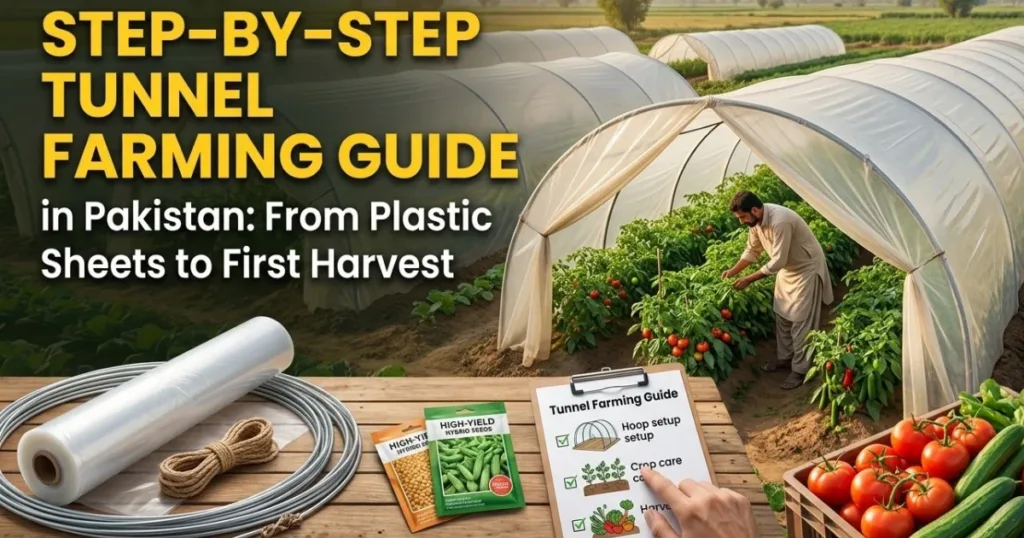
Step-by-Step Tunnel Farming Guide in Pakistan: From Plastic Sheets to First Harvest
Table of Contents
Introduction
Imagine harvesting fresh cucumbers, juicy tomatoes and high-quality capsicum when open-field farmers are waiting for the right season. Sounds promising, right? With modern tunnel farming, Pakistani farmers can grow selected vegetables during off-season periods, protect crops from harsh weather and potentially earn better market prices.
Agriculture is changing rapidly and farmers are looking for smarter ways to improve productivity while managing water, fertilizer and labor costs. Tunnel farming in Pakistan is one practical approach to achieving these goals, especially for growers interested in high-value vegetables.
From choosing the right plastic sheets to preparing the soil, installing irrigation, selecting quality seeds and harvesting the first crop, this guide explains the process step by step.
Whether you are a small-scale grower or planning a commercial vegetable farm, this complete tunnel farming guide will help you understand the essentials before investing.
What Is Tunnel Farming?
Tunnel Farming Guide is a protected cultivation method in which crops are grown inside structures covered with transparent or translucent plastic film. The covering helps modify the growing environment by reducing exposure to cold winds, frost and other unfavorable weather conditions.
Depending on the design, farmers can grow vegetables under low tunnels, walk-in tunnels or high tunnels.
In Pakistan, tunnel farming is commonly used to produce vegetables such as tomatoes, cucumbers, capsicum, chilies, melons and selected gourds during suitable off-season windows.
According to the Punjab Agriculture Department, plastic tunnels can help farmers produce summer vegetables during winter and improve the availability of off-season produce.
Benefits of Tunnel Farming Guide in Pakistan
Before starting, it is important to understand why many farmers are considering protected cultivation.
Early and Off-Season Production
Tunnel farming allows farmers to grow selected vegetables outside their usual open-field season. Early production may help growers reach markets when supplies are limited.
Better Crop Protection
Plastic coverings can reduce exposure to cold winds, frost and some weather-related stresses. However, tunnels do not eliminate every risk and excessive heat, pests and diseases still require careful management.
Improved Crop Quality
When irrigation, ventilation, nutrition and pest management are handled properly, tunnel-grown vegetables can achieve good quality and marketable yields.
Efficient Water Management
Combining tunnel cultivation with drip irrigation can deliver water close to plant roots and reduce unnecessary water loss.
Better Use of Growing Space
Vertical training, pruning where appropriate and planned plant spacing can help growers use protected growing areas efficiently.
Potential for Higher Returns
Off-season vegetables may sell at attractive prices, but profit is never guaranteed. Seed costs, tunnel construction, labor, energy, fertilizer, transport and changing market prices all influence the final return.
Step-by-Step Tunnel Farming Guide in Pakistan
Follow these essential steps to establish a productive tunnel farm.
Select the Right Location
Choosing a suitable site is the foundation of successful tunnel farming.
Look for land with the following characteristics:
- Fertile soil with good drainage.
- Reliable access to clean irrigation water.
- Sufficient sunlight throughout the day.
- Easy access to roads and vegetable markets.
- Protection from strong winds where practical.
- Enough space for tunnel structures, walkways and irrigation equipment.
Avoid low-lying fields where water accumulates after heavy rain or irrigation.
Choose the Best Tunnel Type
Different tunnel designs suit different budgets, crops and farming goals.
Low tunnel: A relatively low-cost option in which plastic film is supported by small hoops above crop rows. It is useful for selected short-term crops and early-season protection.
Walk-in tunnel: A larger structure that allows workers to enter for irrigation, pruning, training and harvesting. It is suitable for many commercial vegetable operations.
High tunnel: A taller protected structure that offers more working space and can accommodate crops requiring vertical support and extended management.
For beginners, a small, manageable tunnel can be a sensible way to learn the technology before expanding.
Choose Quality Plastic Sheets
Plastic sheets are among the most important materials in tunnel farming. The right covering helps create a suitable environment for crop growth.
When buying tunnel plastic, consider:
- UV resistance: Helps the plastic withstand sunlight for longer.
- Light transmission: Supports photosynthesis and healthy plant development.
- Film thickness: Select an appropriate specification for the structure, local weather and expected service life.
- Durability: Good-quality film can reduce the frequency of replacement.
- Suitable width and length: Ensure the sheet covers the tunnel properly without excessive stretching.
Do not select plastic based on price alone. Very thin or unsuitable film may tear easily and increase replacement costs.
Ask your agricultural supplier for a film specifically intended for tunnel cultivation. Avoid using ordinary packaging plastic as a substitute for agricultural tunnel film.
Prepare the Soil and Raised Beds
Healthy soil supports strong roots, better nutrient uptake and productive plants.
Begin by removing weeds, previous crop residues and other unwanted material. Loosen and level the field as needed, then prepare raised beds suitable for your tunnel design and irrigation system.
Add well-decomposed farmyard manure or compost when appropriate. Avoid fresh manure that could damage plants or introduce contamination.
Before planting:
- Test soil pH and nutrient levels.
- Improve drainage where necessary.
- Incorporate organic matter according to soil conditions.
- Prepare beds and pathways.
- Install irrigation lines before sowing or transplanting.
Do not apply fertilizer blindly. The required quantity depends on the crop, soil test and expected production.
Select the Best Tunnel Farming Guide Crops
Crop selection should match your local climate, available budget, tunnel design and market demand.
Popular options include:
Cucumber: A widely grown vegetable that can be suitable for protected cultivation and early production.
Tomato: A valuable crop that requires suitable varieties, careful irrigation, support and disease monitoring.
Capsicum: Can offer attractive market opportunities but often needs more careful temperature and nutrient management.
Green chili: Suitable varieties can be grown under protected conditions, depending on the production schedule.
Melon and watermelon: May be suitable for particular tunnel systems and planting windows.
Bitter gourd and bottle gourd: Can be considered when the chosen variety and tunnel design suit their growth habit.
Before selecting a crop, check local demand, seed availability, expected selling prices and the recommended planting calendar for your district.
Buy Quality Seeds and Raise Healthy Seedlings
Good seed is essential for establishing a uniform crop.
Choose certified or reputable seed from a trusted supplier. Check the variety, germination information, expiry date, disease-resistance characteristics and suitability for tunnel cultivation.
Some crops, such as tomato and capsicum, are commonly established through nursery seedlings. Others, including suitable cucumber varieties, may be direct-seeded under the appropriate production system.
For nursery-grown crops:
- Use clean seedling trays and suitable growing media.
- Provide appropriate moisture and light.
- Avoid excessive watering.
- Remove weak or diseased seedlings.
- Harden seedlings gradually before transplanting when needed.
Do not assume every hybrid is suitable for every tunnel type. Follow the seed supplier’s crop-specific instructions.
Install the Tunnel Farming Guide Structure Correctly
Once the field and beds are ready, install the structure according to the selected design.
Secure the hoops or frame firmly. Use suitable anchors and supports to withstand local wind conditions. Place the plastic film evenly and secure its edges properly.
Check that the structure has adequate ventilation openings. A tunnel that traps excessive heat and moisture can damage crops even when the plastic is intact.
Before planting, inspect the structure for loose supports, sharp edges, gaps and possible drainage problems.
For a commercial installation, seek guidance from an experienced tunnel-farming technician or local agricultural extension office.
Install Drip Irrigation
Water management is critical to tunnel farming because the covered structure changes how rainfall reaches the crop.
Drip irrigation is often a practical option because it supplies water near the root zone and can help maintain more consistent soil moisture.
To set up the system:
- Install a suitable water source and filtration unit.
- Lay main and lateral irrigation pipes.
- Position drip lines according to the bed layout.
- Check emitters for blockages and uneven flow.
- Test the system before planting.
- Adjust irrigation frequency to crop stage, soil type and weather.
Avoid both waterlogging and severe moisture stress. Excess water can encourage root diseases, while insufficient irrigation can reduce flowering, fruit development and yield.
Apply Fertilizers According to Crop Needs
Fertilizers help supply essential nutrients, but the right balance matters more than applying large quantities.
Nitrogen supports leafy growth, phosphorus contributes to root development and energy transfer and potassium plays an important role in water regulation and fruit development.
A sound tunnel farming fertilizer plan should include:
- Soil testing before planting.
- Well-decomposed organic manure where suitable.
- Balanced NPK fertilizer according to crop requirements.
- Appropriate micronutrients when a deficiency is confirmed or recommended.
- Split applications where suitable for the crop and growing system.
Over-fertilization can waste money, increase salt accumulation and harm plant growth. Avoid mixing fertilizers without checking compatibility, particularly when using fertigation through drip irrigation.
For reliable results, follow locally recommended fertilizer schedules rather than using one formula for every vegetable.
Manage Temperature and Ventilation
Temperature management is one of the most important parts of protected cultivation.
On sunny days, the temperature inside a plastic tunnel can rise rapidly, even when outdoor conditions are cool. Excessive heat can affect flowering, pollination, fruit setting and plant health.
To manage the growing environment:
- Open suitable side vents or tunnel openings when temperatures rise.
- Close or adjust coverings when frost or cold winds threaten, as appropriate for the structure.
- Monitor internal temperature and humidity.
- Avoid unnecessary moisture buildup.
- Inspect plants regularly for heat stress.
Never assume the plastic cover should remain completely closed throughout the day. Ventilation needs change with weather, crop stage and tunnel design.
Protect Crops from Pests and Diseases
Protected cultivation does not mean pest-free cultivation. Aphids, whiteflies, mites, fungal diseases and other problems can still develop inside tunnels.
Use integrated pest management (IPM) to reduce avoidable losses.
Practical measures include:
- Inspect leaves, stems, flowers and fruit regularly.
- Remove diseased plant material promptly.
- Use clean tools and healthy seedlings.
- Manage weeds and maintain good airflow.
- Use suitable physical barriers or insect screens where practical.
- Apply registered pesticides only when necessary and according to label directions.
Always follow the recommended dose, protective equipment requirements, pre-harvest interval and local regulations. Avoid spraying simply because pests have appeared in a neighboring field.
Harvest at the Right Time
Your first harvest is the result of good planning, consistent crop care and timely management.
Harvesting time varies according to crop, variety, season, temperature and growing conditions. Cucumber may produce harvestable fruit relatively quickly, while tomato and capsicum generally require a different growing period.
During harvesting:
- Pick produce at the recommended maturity stage.
- Use clean harvesting tools.
- Handle fruit carefully to prevent bruising.
- Sort produce according to size and quality.
- Keep harvested vegetables shaded and cool.
- Arrange timely transportation to market.
For commercial growers, speak with buyers before harvest begins so you understand the preferred size, maturity, packaging and delivery schedule.
Estimated Cost of Tunnel Farming Guide in Pakistan
The cost of tunnel farming varies significantly depending on the structure, covered area, plastic quality, irrigation system, crop, labor and location.
Major cost categories include:
| Expense | What it covers |
| Tunnel structure | Hoops, pipes, frame, anchors and installation |
| Plastic sheets | Agricultural tunnel film and fastening materials |
| Seeds and seedlings | Suitable varieties, nursery trays and growing media |
| Soil preparation | Field leveling, bed formation and organic matter |
| Irrigation | Drip lines, filters, pipes and fittings |
| Fertilizers | Organic amendments and crop-specific nutrients |
| Crop protection | Monitoring, pest control and disease management |
| Labor | Planting, training, pruning and harvesting |
| Marketing | Packaging, transport and market charges |
Before starting, prepare a crop-specific budget and compare expected revenue against the full production cost. Do not rely on advertised yield or profit figures without checking the assumptions behind them.
A small pilot tunnel can help you understand production costs and local market demand before expanding to a larger commercial setup.
Common Tunnel Farming Mistakes to Avoid
Even high-quality seeds and plastic sheets cannot compensate for poor management. Avoid these common mistakes:
- Choosing the wrong crop: Select crops according to local climate, planting windows and market demand.
- Using poor-quality plastic: Unsuitable film may tear, deteriorate or transmit insufficient light.
- Ignoring ventilation: Excessive heat and humidity can damage crops and encourage disease.
- Overwatering plants: Waterlogged soil increases the risk of root problems.
- Applying excess fertilizer: Too much fertilizer can damage roots and increase production costs.
- Ignoring pest inspections: Small pest populations can become serious problems if left unchecked.
- Planting without market research: High production does not guarantee high profit.
- Expanding too quickly: Learn from a manageable production area before investing heavily.
Frequently Asked Questions (FAQs)
1. What is tunnel farming in Pakistan?
Tunnel farming is a protected cultivation method in which vegetables are grown under plastic-covered structures. It helps farmers produce selected crops during suitable off-season periods and manage environmental conditions more effectively.
2. Which vegetables are best for tunnel farming in Pakistan?
Cucumber, tomato, capsicum, green chili, melons and selected gourds are common options. The best crop depends on the tunnel type, local climate, planting schedule, available investment and market demand.
3. How much does tunnel farming cost in Pakistan?
There is no single cost for every farm. The total investment depends on tunnel size, construction materials, plastic film, irrigation, seeds, labor and crop-management requirements. Obtain local quotations and prepare a complete budget before starting.
4. Which plastic sheets are suitable for tunnel farming?
Agricultural plastic film designed for protected cultivation is generally preferable. Consider UV resistance, light transmission, durability, thickness and compatibility with your tunnel structure before purchasing.
5. Is tunnel farming profitable in Pakistan?
Tunnel farming can be profitable when farmers choose suitable crops, manage inputs efficiently and sell produce at favorable prices. However, profits are not guaranteed because market rates, weather, pests, construction costs and crop yields can vary.
6. How can beginners start tunnel farming?
Start by researching local market demand, testing the soil, choosing a suitable crop and learning the recommended planting calendar. Begin with a manageable area, use quality seeds and appropriate plastic film, install reliable irrigation and seek advice from agricultural extension experts.
Final Thoughts
Tunnel Farming Guide offers Pakistani farmers an opportunity to explore off-season vegetable production, improve crop management and respond to changing market demand. However, success depends on much more than installing plastic sheets. Careful crop selection, soil preparation, quality seeds, balanced fertilizers, efficient irrigation, proper ventilation and timely harvesting all play important roles.
If you are planning to establish a tunnel farm, take time to research your local growing conditions and calculate your investment before getting started.
FazalAgriMall aims to support farmers and gardening enthusiasts by helping them explore agricultural essentials, including seeds, fertilizers, pesticides and farming tools. Choosing suitable products and following sound agricultural practices can help you make more informed decisions for your farm.
Start planning today, invest wisely and take your first step toward smarter vegetable cultivation with FazalAgriMall.
No Comments