
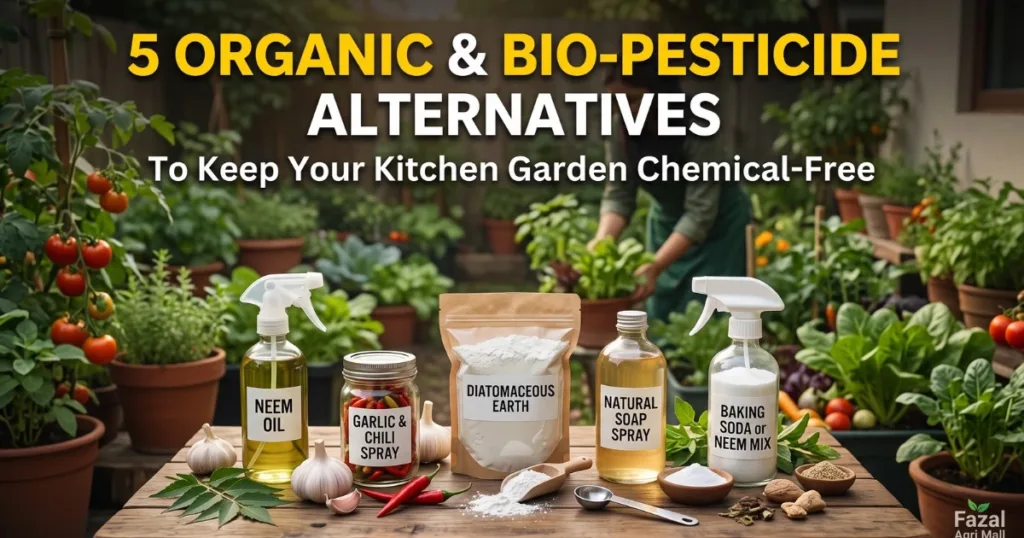
5 Organic & Bio-Pesticide Alternatives to Keep Your Kitchen Garden Chemical-Free
Table of Contents
A healthy kitchen garden provides fresh vegetables, flavorful herbs and nutritious produce right at home. However, pests such as aphids, whiteflies, caterpillars and spider mites can quickly damage plants and reduce your harvest. Many gardeners rely on chemical pesticides, but there are other ways to manage unwanted insects while supporting a healthier garden ecosystem.
Organic and bio-pesticide alternatives for kitchen gardens offer practical ways to control common pests when used correctly. From neem-based products to beneficial insects and biological pesticides, these methods can help protect vegetables while reducing unnecessary chemical exposure.
In this guide, fazalagrimall explores five useful organic and biological pest-control alternatives, how they work and how to use them responsibly for a productive kitchen garden.
Why Choose Organic and Bio-Pesticide Alternatives?
Organic and biological pest-control methods can help gardeners manage pests while protecting beneficial organisms and maintaining garden biodiversity. Their effectiveness depends on the pest, crop, product formulation and application method.
Here are some key benefits:
- Targeted pest management: Certain biological products work against specific insect pests.
- Support for beneficial insects: Selective methods can reduce harm to pollinators and natural predators.
- Reduced reliance on conventional pesticides: Combining several approaches may reduce the need for broad-spectrum chemical treatments.
- Better garden management: Regular monitoring and preventive care help prevent pest populations from becoming severe.
- Suitable options for home gardens: Many methods can be incorporated into an integrated pest management plan.
Remember that organic does not automatically mean harmless. Always follow the product label and protect people, pets, pollinators and edible crops.
Neem Oil: A Natural Pest-Control Option
Neem oil is a popular option for gardeners looking for a plant-based pest-control product. Certain neem formulations can help manage pests such as aphids, whiteflies and spider mites by affecting feeding, growth or other biological processes.
How to Use Neem Oil
- Choose a neem product specifically labeled for the intended edible crop and pest.
- Follow the label instructions for dilution and application.
- Test the solution on a small number of leaves before treating the whole plant.
- Apply during cooler hours when appropriate, avoiding intense sunlight and conditions that increase the risk of leaf damage.
- Avoid spraying flowers visited by bees and other pollinators.
Best for: Selected soft-bodied insects and other labeled pests.
Important tip: Do not assume that every neem oil product is approved for edible vegetables. Use only suitable formulations and observe the required pre-harvest interval.
Insecticidal Soap for Soft-Bodied Insects
Insecticidal soap is designed to control certain soft-bodied pests, including aphids, mealybugs and whiteflies. It works primarily through direct contact, so insects must be adequately covered for the treatment to be effective.
Unlike ordinary household detergent, a registered insecticidal soap is formulated for pest control on plants.
How to Use Insecticidal Soap
- Identify the pest before choosing a treatment.
- Select a product labeled for your vegetable or herb.
- Apply it according to the label, covering the affected areas without unnecessarily soaking the plant.
- Check the plant for signs of leaf injury.
- Reapply only as directed if pests remain.
Best for: Aphids, whiteflies and other labeled soft-bodied pests.
Important tip: Household dishwashing liquids are not reliable substitutes for formulated insecticidal soap and may damage foliage. Avoid treating drought-stressed plants or spraying during hot weather.
Bacillus thuringiensis (Bt): Biological Control for Caterpillars
Bacillus thuringiensis, commonly called Bt, is a naturally occurring bacterium used in certain biological insecticides. Some Bt strains target particular caterpillars, making them useful for managing susceptible larvae on vegetables.
For example, products containing an appropriate strain may help control certain caterpillar pests affecting cabbage, broccoli and other crops.
How to Use Bt Correctly
- Identify the caterpillar species before selecting a Bt product.
- Choose a formulation labeled for the crop and target pest.
- Apply it at the recommended stage of pest development.
- Ensure the larvae can consume treated plant material when the product requires ingestion.
- Follow label directions regarding weather, repeat applications and harvest intervals.
Best for: Susceptible caterpillar larvae, including certain leaf-feeding pests.
Important tip: Bt does not control every insect. It is generally ineffective against unrelated pests such as aphids and spider mites. The correct strain and product formulation matter.
Beneficial Insects: Let Nature Help Protect Your Garden
Not every insect in your kitchen garden is harmful. Ladybirds, lacewing larvae and certain predatory mites feed on common garden pests. Encouraging these beneficial organisms can help keep pest populations under control naturally.
This approach reduces the need to treat every insect you see and supports a balanced garden ecosystem.
Ways to Attract Beneficial Insects
- Grow suitable flowering plants that provide nectar and pollen.
- Avoid unnecessary broad-spectrum insecticide applications.
- Inspect leaves regularly to distinguish harmful pests from beneficial insects.
- Maintain plant diversity and suitable garden habitat.
- Consider commercially supplied beneficial insects when appropriate for the crop and pest.
Best for: Supporting natural control of aphids, mites and other pests, depending on the beneficial species.
Important tip: Beneficial insects may not eliminate an established infestation immediately. Give natural predators time to work and monitor pest levels before deciding whether another treatment is necessary.
Horticultural Oils and Other Registered Bio-Pesticides
Horticultural oils are specially formulated products that can help manage certain insects and mites by acting directly on the pest. Other biological pest-control products use naturally occurring microorganisms or biological substances to target particular pests.
These products can be useful when you need an option suited to a specific problem rather than a general-purpose spray.
How to Choose the Right Product
- Identify the pest and the vegetable or herb being affected.
- Read the label to confirm that the crop and pest are listed.
- Check application rates, protective equipment requirements and harvest restrictions.
- Avoid spraying in conditions that could cause plant injury.
- Rotate compatible pest-management approaches when needed rather than repeatedly relying on one treatment.
Best for: Specific pests covered by the product label.
Important tip: Horticultural oils and biological pesticides are not interchangeable. Select the product based on the pest, crop and label instructions rather than assuming all natural products work in the same way.
Extra Tips for a Healthier, Pest-Resistant Kitchen Garden
Using organic and bio-pesticide alternatives works best when combined with good gardening practices.
Inspect Plants Regularly
Check the undersides of leaves, young shoots and stems for eggs, webbing, discoloration or feeding damage. Early detection makes pest control easier.
Remove Infested Plant Parts
Prune heavily infested leaves when appropriate and dispose of them safely. Avoid moving infested material to healthy plants.
Use Physical Barriers
Suitable insect netting or row covers can prevent some pests from reaching plants. Make sure the barrier suits the crop and does not interfere with pollination.
Water and Feed Plants Properly
Healthy plants can tolerate some pest damage better than stressed plants. Avoid overwatering, provide suitable nutrition and maintain good airflow.
Practice Crop Rotation
Where space allows, avoid repeatedly growing related crops in the same location. Crop rotation can help disrupt certain pest life cycles.
Follow Integrated Pest Management
Integrated pest management (IPM) combines pest identification, monitoring, prevention, physical controls, beneficial organisms and carefully selected pesticides when necessary. It is more reliable than spraying plants routinely without confirming a pest problem.
Frequently Asked Questions (FAQs)
1. What are the best organic pesticides for a kitchen garden?
Neem-based products, registered insecticidal soaps, suitable Bt products, horticultural oils and biological control agents can be useful. The best choice depends on the pest, vegetable and product label.
2. Are bio-pesticides safe for edible vegetables?
Some bio-pesticides are approved for particular edible crops when used according to their labels. Always check crop approval, application instructions, protective measures and the pre-harvest interval.
3. Can neem oil control all garden pests?
No. Neem products work against certain pests but are not effective against every insect. Results depend on the formulation, target pest, timing and application method.
4. How can I control aphids without harsh chemicals?
Start by inspecting plants, removing heavily infested parts where practical and using a suitable water spray for small infestations. Encourage natural predators or use a labeled insecticidal soap when needed.
5. What is the difference between organic pesticides and bio-pesticides?
Organic pesticides are generally associated with approved organic-production inputs, while bio-pesticides are derived from certain natural materials, microorganisms or biological processes. The categories can overlap, but not every bio-pesticide is automatically approved for organic production.
6. How often should I apply organic pest-control products?
There is no single schedule for every product. Follow the label for application frequency, weather restrictions, repeat treatments and harvest intervals. Monitor pest levels rather than spraying unnecessarily.
Final Thought
Keeping a kitchen garden productive does not always require routine use of conventional chemical pesticides. Neem-based products, insecticidal soaps, Bt formulations, beneficial insects and suitable horticultural oils can all play a role in responsible pest management when selected for the correct crop and pest.
The most effective strategy combines early pest detection, healthy gardening practices and targeted treatments. Start with prevention, protect beneficial insects and use only products approved for your intended crops.
fazalagrimall supports informed agricultural and gardening decisions by helping growers explore practical solutions for healthier plants and more productive gardens. Choose the right pest-control approach, follow product instructions carefully and enjoy growing fresh produce with greater confidence.
For expert guidance on organic pesticides, bio-pesticides and effective garden care, contact fazalagrimall today and explore the right solutions for a healthier, more productive kitchen garden.
No Comments