
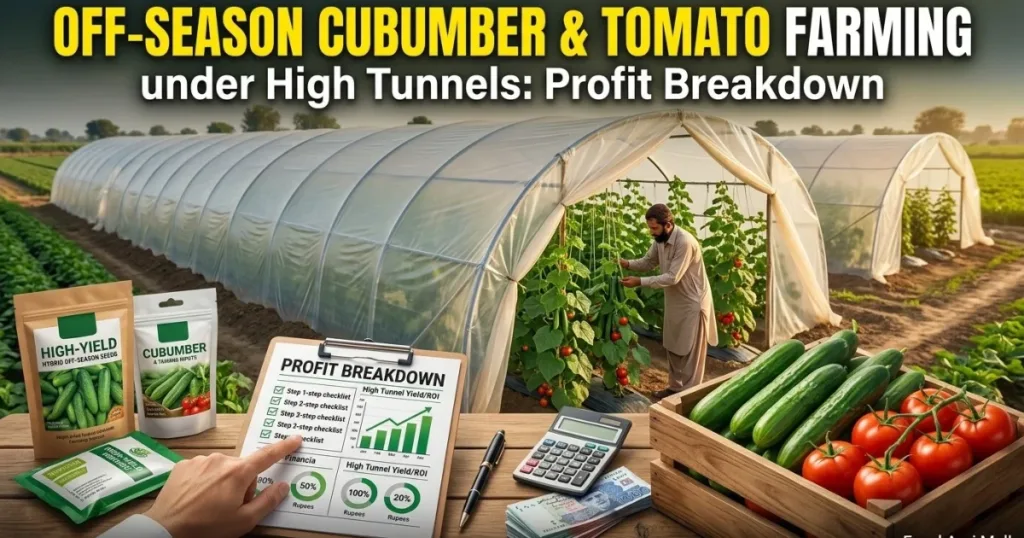
Off-Season Cucumber and Tomato Farming Under High Tunnels: Profit Breakdown
Table of Contents
Off-season vegetable farming is creating new opportunities for farmers in Pakistan who want to increase crop productivity and earn better returns. Among the most promising options, off-season cucumber and tomato farming under high tunnels allows growers to produce fresh vegetables during periods when open-field production may be limited by unfavorable weather.
High-tunnel farming provides a partially controlled growing environment that helps protect crops from wind, heavy rain and certain temperature fluctuations. With proper irrigation, quality seeds and effective crop management, farmers can improve production and target markets when vegetable supplies are lower.
However, successful tunnel farming requires careful financial planning. Construction costs, fertilizers, labor, pest control, crop yield and market prices all affect the final profit. This guide explains how to grow cucumbers and tomatoes under high tunnels, estimate expenses and develop a profitable farming strategy with insights relevant to Pakistani growers.
What Is High-Tunnel Farming?
High-tunnel farming is a protected cultivation technique in which vegetables are grown inside a structure covered with agricultural plastic. Unlike conventional open-field cultivation, high tunnels help modify the growing environment and extend the period during which certain crops can be produced.
In Pakistan, this method is particularly useful for farmers who want to explore off-season vegetable cultivation and supply fresh produce to local markets.
The main advantages of high-tunnel farming include:
- Extended growing seasons for suitable vegetable varieties.
- Reduced exposure to wind and heavy rainfall.
- Improved control over irrigation and fertilizer application.
- Potentially better fruit quality and marketable yield.
- Opportunities to supply vegetables when market availability is limited.
Nevertheless, high tunnels require adequate ventilation. Excessive heat and humidity can damage plants, reduce fruit setting and encourage diseases if the growing environment is poorly managed.
Why Grow Cucumbers and Tomatoes Under High Tunnels?
Cucumbers and tomatoes are widely consumed vegetables with established markets across Pakistan. Both crops can perform well under suitable protected cultivation conditions, although their growing requirements and harvesting patterns differ.
Off-Season Cucumber Farming
Cucumber farming can provide frequent harvesting opportunities because fruits develop relatively quickly under favorable conditions. Farmers can improve plant growth by using suitable varieties, drip irrigation, trellising and balanced fertilization.
Vertical training helps keep vines organized, improves access during harvesting and can support better airflow around the plants.
To improve cucumber production, farmers should focus on:
- Selecting varieties suitable for protected cultivation.
- Maintaining consistent soil moisture.
- Applying fertilizers according to crop requirements.
- Monitoring pests such as aphids and whiteflies.
- Harvesting fruits regularly at the appropriate size.
Because cucumbers can lose freshness quickly, access to reliable buyers is important for reducing post-harvest losses.
Off-Season Tomato Farming
Tomatoes are another attractive option for high-tunnel cultivation because they have broad consumer demand and can produce repeated harvests over an extended period, depending on the variety and growing conditions.
Protected tomato production requires suitable temperatures, plant support, pruning where appropriate, balanced nutrition and effective disease management.
Farmers should pay particular attention to flowering and fruit setting because extreme temperatures can reduce successful pollination and lower marketable yields.
Choosing tomato varieties with appropriate disease resistance, fruit characteristics and maturity periods can help improve the chances of a successful crop.
How to Set Up a High Tunnel for Vegetable Production
A successful high-tunnel project begins with proper planning. The structure should match the local climate, available budget and intended crop.
Select Suitable Land
Choose a location with good drainage, reliable irrigation water and convenient access to roads or nearby markets. Avoid areas that frequently experience waterlogging or strong, unprotected wind exposure.
Before construction, assess soil fertility and salinity. Soil testing can help identify nutrient deficiencies and other limitations that may affect crop performance.
Install a Durable Tunnel Structure
A typical high tunnel consists of a supporting frame, agricultural plastic covering, anchoring materials and ventilation openings.
Choose materials according to local weather conditions and expected service life. Poor-quality plastic or weak structural supports can increase repair expenses and expose crops to unnecessary risks.
Prepare the Soil and Planting Beds
Prepare well-drained planting beds and incorporate suitable organic matter when necessary. Correct soil nutrient deficiencies based on test results rather than applying fertilizers without a clear plan.
Crop rotation, sanitation and proper soil management can help reduce the buildup of soilborne pests and diseases.
Use Drip Irrigation
Drip irrigation delivers water near the plant roots, helping farmers manage moisture more efficiently. It can also support fertigation, in which suitable water-soluble fertilizers are applied through the irrigation system.
The irrigation schedule should depend on crop stage, soil type, weather and plant water requirements. Both overwatering and water stress can reduce productivity.
Choose Quality Seeds
Select cucumber and tomato seeds suited to the local climate, protected growing conditions and market requirements.
Seed selection should consider disease resistance, expected yield, fruit quality, maturity and suitability for the intended planting season.
Farmers can explore agricultural products and farming resources at Fazal Agri Mall:
Maintain Temperature and Ventilation
High tunnels can become extremely hot during sunny weather. Adequate ventilation and appropriate planting dates are essential for maintaining suitable growing conditions.
Monitor temperatures regularly and adjust ventilation according to the crop’s requirements. Do not assume that a plastic-covered structure will automatically improve plant growth in every season.
Off-Season Cucumber and Tomato Farming: Profit Breakdown
The financial return from tunnel farming depends on three major factors: total production costs, marketable crop yield and the selling price received by the farmer.
A higher selling price does not automatically guarantee a profit. Low yields, rejected produce, expensive inputs or poor market access can reduce earnings significantly.
Major Costs of High-Tunnel Farming
Before planting, prepare a detailed budget covering the following expenses.
| Expense | Details |
| Tunnel construction | Frame, plastic covering, anchoring and installation |
| Seeds and seedlings | Quality seeds, nursery supplies and transplanting |
| Land preparation | Bed formation, soil testing and amendments |
| Irrigation system | Pipes, drip lines, filters and water supply |
| Fertilizers | Required nutrients and fertigation supplies |
| Labor | Planting, training, pruning and harvesting |
| Crop protection | Pest monitoring and disease management |
| Marketing | Packaging, transportation and market commissions |
Tunnel construction is generally an initial investment, while seeds, fertilizers, labor and crop protection are recurring expenses. If the structure is used for multiple crop cycles, its cost should be allocated across its useful life.
The calculation uses the following formula:
Net profit = Gross revenue − Operating expenses − Allocated tunnel cost
For example, if a farmer sells 10,000 kilograms of marketable vegetables at Rs. 100 per kilogram, gross revenue equals Rs. 1,000,000. After deducting the assumed operating and allocated setup expenses, the remaining amount is Rs. 350,000.
Farmers should also account for financing costs, taxes where applicable, land rent, equipment depreciation and any other expenses not already included in the calculation.
Which Is More Profitable: Cucumbers or Tomatoes?
There is no single answer that applies to every farm. Both crops can generate attractive returns when production is well managed and the harvest reaches the market at a favorable price.
Cucumber farming may appeal to growers seeking relatively quick production and frequent picking. However, cucumbers require regular harvesting, careful moisture management and prompt marketing.
Tomato farming may offer a longer harvesting period with suitable varieties. However, growers must manage plant support, pruning where needed, fruit-setting conditions and disease risks.
Before selecting a crop, compare the expected yield, production costs, harvest duration, market demand and selling price for your specific location.
A small trial area can help farmers gain practical experience before committing a larger investment to high-tunnel cultivation.
Practical Ways to Increase Tunnel Farming Profit
Use Balanced Fertilization
Apply fertilizers according to soil tests and crop requirements. Excessive fertilizer application increases expenses and can create nutrient imbalances without necessarily improving yield.
Control Pests and Diseases Early
Inspect plants frequently for insects, leaf damage, fungal symptoms and other signs of crop stress. Use integrated pest management, maintain tunnel hygiene and apply registered crop-protection products according to label instructions.
Reduce Post-Harvest Losses
Harvest cucumbers and tomatoes carefully, sort produce by quality and use suitable packaging. Arrange transportation promptly to preserve freshness and reduce damage.
Plan Your Market Before Planting
Contact wholesalers, retailers, restaurants and local vegetable markets to understand their purchasing requirements. Compare expected prices after accounting for transportation, commissions, packaging and rejected produce.
Keep Accurate Farm Records
Record input expenses, labor costs, harvest quantities, selling prices and crop losses. These records help determine the actual return from each crop cycle and improve decisions for future seasons.
Frequently Asked Questions (FAQs)
1. Is off-season cucumber farming profitable in Pakistan?
Off-season cucumber farming can be profitable when marketable yields are good, input costs are controlled and selling prices cover production expenses. Profitability depends on local weather, variety selection, market demand and farm management.
2. Is high-tunnel tomato farming better than open-field cultivation?
High-tunnel tomato farming can extend the growing season and reduce exposure to certain weather conditions. However, it involves higher initial investment and requires temperature management, ventilation and careful crop monitoring. The better option depends on local conditions and financial feasibility.
3. How much investment is required for high-tunnel farming?
The investment depends on the structure’s dimensions, construction materials, plastic covering, irrigation system, land preparation and crop inputs. Farmers should obtain current supplier quotations and prepare a detailed budget before investing.
4. Which crop is better for high-tunnel farming: cucumber or tomato?
Both crops have commercial potential. Cucumbers may offer quicker production and frequent harvesting, while tomatoes can provide repeated harvests over a longer period with suitable varieties. Compare expected costs, marketable yields and seasonal selling prices before deciding.
5. How can farmers increase cucumber and tomato yields under high tunnels?
Farmers can improve results through quality seeds, balanced nutrition, appropriate irrigation, suitable ventilation, proper plant training and timely pest and disease management. Consistent monitoring helps identify problems before they significantly affect production.
6. What is the best time to grow cucumbers and tomatoes under high tunnels in Pakistan?
The best planting period depends on the region, variety, tunnel design and expected temperatures. Farmers should consult local agricultural extension services and use a planting calendar suited to their specific area and target market.
Final Thought
Off-season cucumber and tomato farming under high tunnels offers Pakistani farmers an opportunity to explore protected vegetable production and potentially improve their agricultural income. However, long-term success depends on careful financial planning, suitable crop selection, efficient water management and reliable market access.
Before investing, calculate the expected production costs, estimate realistic selling prices and determine the minimum yield required to cover expenses. Starting on a manageable scale can help farmers develop practical experience and reduce financial risk.
Fazal Agri Mall is committed to helping farmers explore agricultural products and practical farming resources. Visit to discover products for your agricultural needs and support your journey toward more productive farming.
For quality agricultural products and farming supplies, contact Fazal Agri Mall today and take the next step toward more productive and profitable farming.


No Comments