
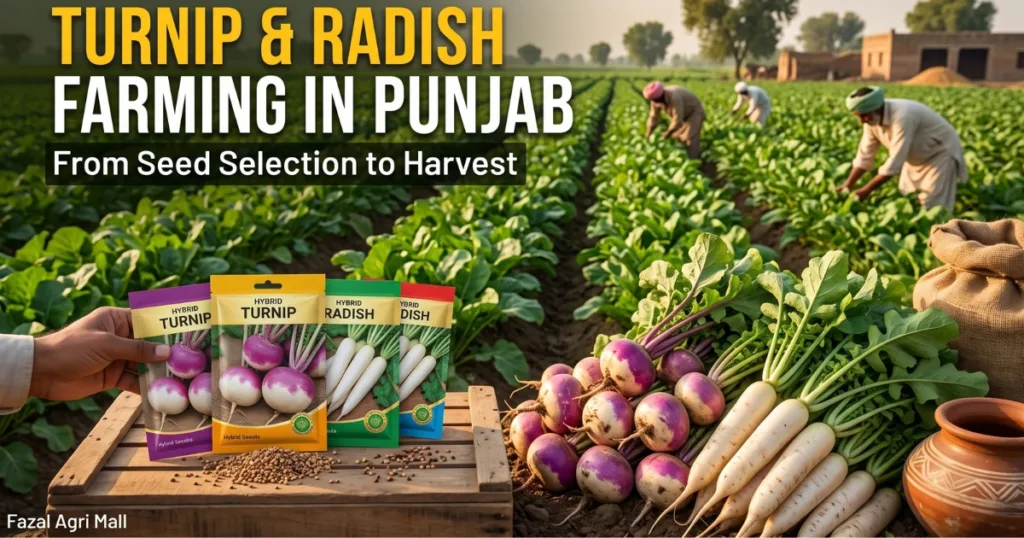
Turnip & Radish Farming in Punjab: From Seed Selection to Harvest
Table of Contents
Turnip and radish farming are popular root vegetables grown across Punjab, Pakistan, because of their relatively short growing cycles, versatile uses and demand in local markets. Whether you are a commercial farmer or a home gardener, successful turnip and radish farming in Punjab starts with choosing quality seeds, preparing fertile soil, selecting the right sowing time and providing proper crop care.
Punjab’s seasonal conditions can support productive root vegetable cultivation when farmers choose suitable varieties and follow recommended agricultural practices. From seed selection to harvesting, every step influences root size, shape, taste and overall yield. With quality seeds and the right farming techniques from fazalagrimall, growers can make informed decisions to improve crop performance and produce healthy vegetables.
Why Grow Turnip and Radish Farming in Punjab?
Turnip and radish farming are valuable winter-season vegetables in Punjab. They are used in household cooking, salads, pickles and traditional dishes. Their comparatively quick maturity also makes them useful options for farmers planning seasonal vegetable production.
Radishes are generally ready for harvest sooner than turnips, depending on the variety and growing conditions. This allows growers to plan successive sowings and supply fresh produce to local markets. Turnips can also provide a useful market opportunity when grown in suitable soil with consistent moisture and proper spacing.
The key to successful production is understanding the differences between these crops and meeting their individual growing requirements.
Choose the Best Turnip and Radish Seeds
Seed selection is one of the most important steps in vegetable farming. High-quality seeds with good germination, varietal purity and suitability for the local climate help establish a healthy crop.
When selecting seeds, consider the following factors:
- Climate suitability: Choose varieties recommended for the Punjab growing season.
- Maturity period: Select early-maturing varieties when a quicker harvest is your priority.
- Root quality: Look for varieties known for desirable root shape, colour, texture and market acceptance.
- Seed germination: Purchase fresh seeds from a reliable supplier and check the packet’s expiry date.
- Disease resistance: Where available, choose varieties with resistance or tolerance to locally relevant diseases.
For commercial farming, compare seed varieties according to your soil type, planting date, available irrigation and target market. Fazal Agri Mall can be a starting point when exploring agricultural products and seed options for your farming needs.
Understand the Best Sowing Time in Punjab
Turnip and radish farming are commonly grown as cool-season vegetables in Punjab. The exact sowing period depends on the variety, local temperatures and district-specific conditions.
In many areas of Punjab, late summer through autumn is an important planting window for winter radish and turnip crops. Some suitable radish varieties may also be grown in other seasons, depending on their heat tolerance and local recommendations.
Before sowing, consider these guidelines:
- Check the recommended sowing season on the seed packet.
- Avoid planting varieties that are poorly suited to prevailing temperatures.
- Plan sowing according to the expected harvest date and local market demand.
- Consult local agricultural extension guidance for variety-specific sowing dates.
Planting at the right time supports healthy root development and can reduce problems associated with excessive heat, premature flowering or poor-quality roots.
Prepare the Soil for Healthy Root Development
Loose, fertile, well-drained soil is essential for producing straight, uniform turnip and radish farming. Compacted soil, stones and poorly decomposed organic matter can cause roots to fork, become misshapen or develop unevenly.
Follow these soil preparation steps:
- Plough the field to loosen the soil and improve its structure.
- Break up large clods and remove stones and plant debris.
- Incorporate well-decomposed farmyard manure where appropriate.
- Prepare a fine, level seedbed to encourage uniform germination.
- Ensure the field has proper drainage to prevent waterlogging.
A soil test can help determine whether the field needs specific nutrients or pH adjustments. Avoid applying excessive nitrogen without assessing crop requirements, as too much nitrogen may encourage leafy growth at the expense of desirable root development.
Use the Correct Sowing Method
Proper sowing depth and plant spacing help turnips and radishes develop evenly. Seeds planted too deeply may emerge slowly, while overcrowded plants often produce smaller roots.
For best results:
- Sow seeds directly in the prepared field or garden bed.
- Follow the recommended depth and row spacing for your selected variety.
- Cover seeds lightly with fine soil.
- Water gently after sowing to maintain soil moisture.
- Thin seedlings when necessary to provide enough space for root growth.
Radish spacing varies significantly between small-rooted and long-rooted varieties. Turnip spacing also depends on the cultivar and the intended root size. Therefore, follow the seed supplier’s recommendations instead of using one fixed spacing for every crop.
Irrigation Management for Turnip and Radish Crops
Consistent soil moisture is important from germination through root enlargement. Irregular watering can result in slow growth, tough roots, cracking or an unpleasantly strong flavour in some radish varieties.
Keep these irrigation practices in mind:
- Water immediately after sowing when needed to settle the soil.
- Maintain even moisture during germination and early seedling growth.
- Increase attention to irrigation as roots begin to enlarge.
- Avoid excessive watering and standing water in the field.
- Adjust irrigation according to rainfall, soil texture, temperature and crop stage.
Sandy soils may require more frequent irrigation than heavier soils. Checking soil moisture before watering can help farmers avoid both drought stress and waterlogging.
Fertilizer and Nutrient Management
Balanced nutrition supports healthy leaves and marketable roots. However, fertilizer requirements vary with soil fertility, previous crops, variety and expected yield.
Before applying fertilizer, consider a soil test and recommendations from a local agricultural expert. Apply nutrients according to crop needs rather than assuming that more fertilizer will always produce better results.
Important practices include:
- Use well-decomposed organic manure where suitable.
- Apply phosphorus and potassium according to soil-test recommendations.
- Supply nitrogen in appropriate amounts and at suitable growth stages.
- Avoid excessive nitrogen, which can encourage leafy growth and affect root quality.
- Keep fertilizer away from direct contact with seeds unless the product is specifically formulated for that use.
Good nutrient management helps maintain crop health while supporting efficient fertilizer use and better production decisions.
Weed Control and Crop Protection
Weeds compete with young turnip and radish farming plants for water, nutrients, light and space. Early weed control is particularly important because seedlings can be sensitive to competition.
Use shallow cultivation or careful hand-weeding to remove weeds without damaging developing roots. Clean tools and field sanitation can also help reduce the spread of certain pests and diseases.
Common problems to monitor include:
- Aphids and other sap-feeding insects
- Flea beetles and leaf-feeding insects
- Fungal diseases encouraged by excessive moisture
- Root damage associated with soil pests and poor drainage
Inspect plants regularly for yellowing leaves, holes, wilting or abnormal root growth. Identify the problem before applying any pesticide. Use only locally registered products according to label directions, pre-harvest intervals and recommended protective measures.
Integrated pest management, including crop rotation, field monitoring, sanitation and appropriate biological or chemical controls, can help reduce crop losses.
Harvesting Turnips and Radishes at the Right Time
Harvest timing affects root size, texture, taste and market value. Both crops should be harvested according to the maturity characteristics of the selected variety rather than a single universal date.
Radishes may mature in approximately 25–60 days after sowing, while turnips often require around 45–70 days. These are general estimates; actual maturity depends on variety, temperature, soil moisture and crop management.
Look for these harvest indicators:
- Roots have reached the expected size for their variety.
- The colour and shape are consistent with the selected cultivar.
- Roots remain firm and have not become excessively woody or fibrous.
- The crop is harvested before roots become overmature.
Loosen the soil carefully before pulling roots to reduce breakage. Remove damaged or diseased vegetables, handle the produce gently and keep harvested roots shaded while preparing them for market.
Common Mistakes to Avoid in Turnip and Radish Farming
Farmers can improve crop quality by avoiding a few common mistakes:
Choosing unsuitable seeds: A variety that performs well in one climate or season may not perform equally well in another.
Planting too closely: Overcrowding can restrict root growth and reduce the size and uniformity of the harvest.
Ignoring soil preparation: Hard, compacted soil can lead to misshapen roots.
Overwatering: Poor drainage and excessive moisture can increase the risk of root problems.
Applying excessive fertilizer: Unbalanced nutrition may reduce root quality and waste production costs.
Delaying harvest: Overmature roots may become tough, fibrous or less appealing to buyers.
By managing these factors carefully, growers can improve the consistency of their crop and make better use of their land, water and inputs.
Improve Vegetable Production with Fazal Agri Mall
Successful vegetable farming depends on combining suitable seeds with sound agricultural practices. Farmers should compare varieties, check seed quality, follow recommended sowing dates and manage irrigation and nutrition according to their field conditions.
fazalagrimall aims to support agricultural needs by helping customers explore farming products and seed options. Before purchasing, review the available product details and confirm that the variety matches your location, season and intended use.
For commercial growers, keeping records of seed varieties, sowing dates, irrigation, fertilizer applications, pest observations and harvest results can help identify which practices work best from one season to the next.
Frequently Asked Questions (FAQs)
1. What is the best time for turnip and radish farming in Punjab?
Autumn is an important season for many winter turnip and radish farming in Punjab. The best planting dates depend on the cultivar, district and temperature, so check variety-specific recommendations before sowing.
2. How many days do radishes take to grow?
Many radish varieties mature in approximately 25–60 days. The exact period depends on the variety, weather, soil conditions and crop management.
3. How long does turnip take to mature?
Turnips often mature in around 45–70 days, although some varieties may take less or more time. Check the seed packet for the expected maturity period.
4. Which soil is best for growing turnips and radishes?
Loose, fertile, well-drained sandy loam or loamy soil is generally suitable. Soil that is compacted, stony or poorly drained can affect root shape and quality.
5. How can farmers improve turnip and radish yield?
Farmers can support better yields by selecting suitable seeds, sowing at the right time, preparing a fine seedbed, maintaining consistent moisture, controlling weeds and applying balanced nutrients based on soil needs.
6. Where can I find vegetable seeds in Pakistan?
Farmers can explore agricultural suppliers and online seed stores such as fazalagrimall. Always check variety information, seed quality, packaging details and suitability for the local growing season before purchasing.
Final Thought
Turnip and radish farming in Punjab can be a productive part of seasonal vegetable cultivation when farmers make the right decisions from the beginning. Selecting suitable seeds, preparing healthy soil, planting at the right time, managing water and nutrients and harvesting at the correct maturity all contribute to better root quality and marketability.
For farmers who want to strengthen their vegetable-growing practices, the best approach is to combine reliable seed selection with consistent crop monitoring and locally recommended farming techniques. Explore suitable agricultural products and seed options at fazalagrimall and plan your next crop with care.
Start with the right seeds, follow the right practices and work toward a healthier harvest.
For quality vegetable seeds and reliable agricultural products, contact Fazal Agri Mall today or visit our website to explore the best options for your farming needs.
No Comments